Patmos, Greece: Where It Is, How to Get There, What to Do

Patmos is a small Greek island at the northern edge of the Dodecanese, best known as the place where, according to Christian tradition, Saint John wrote the Book of Revelation. A fortified monastery crowns the hilltop village of Chora, the harbour of Skala sits in a deep bay below, and the coast around them is cut into quiet coves. There is no airport, so getting there is part of the plan, and many visitors arrive by ferry or on a yacht.
Short answer: Patmos belongs to Greece and lies in the eastern Aegean, in the north of the Dodecanese island group. You reach it by ferry from Piraeus or from nearby islands such as Kos, Leros, Lipsi, Samos and Rhodes, after flying to Kos, Leros or Samos, or on a private yacht or gulet. From Turkey, the usual routes go through Kos or Samos. For a week on the water that includes Patmos, see our gulet charter in Greece options.
Where Is Patmos?
Patmos is one of the northernmost islands of the Dodecanese. It covers about 34 square kilometres and has a population of around 3,300 (2021 census). Samos lies to the north, the small islands of Lipsi and Arki to the east, and Leros to the south-east. Administratively it belongs to the Kalymnos regional unit, and the municipality also includes the tiny islands of Arki and Marathos.
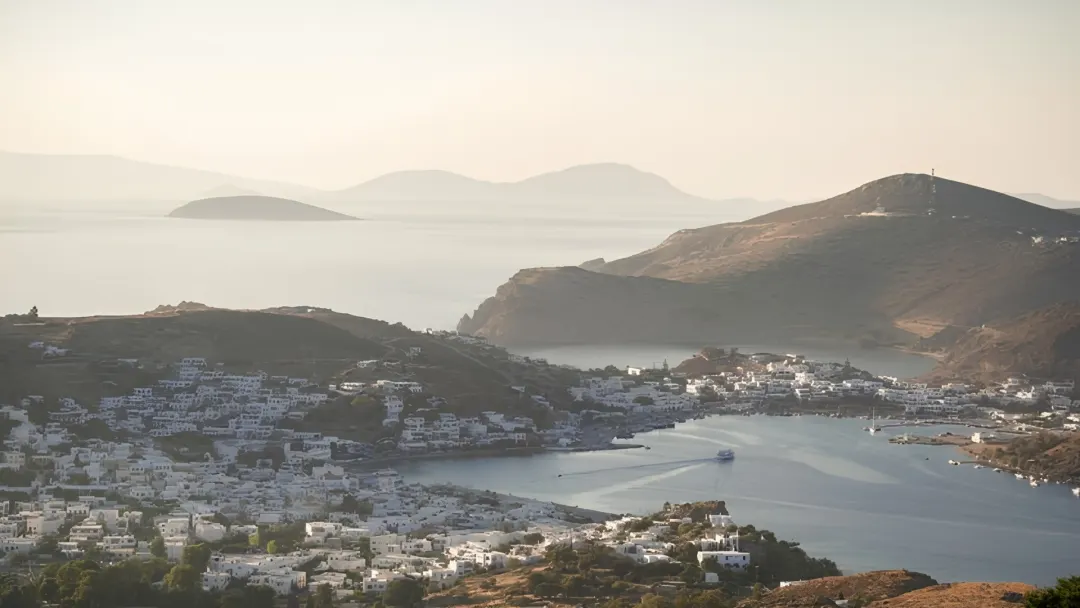
The island is rocky and indented rather than mountainous: its highest point, Profitis Ilias, reaches only 269 metres. Life centres on two places. Skala, the only port, sits on a deep bay in the middle of the island. Chora, the old capital, stands on the hill above, about 4 km by road, built around the walls of the Monastery of Saint John. Neighbouring Lipsi is a short hop away and often shares a day with Patmos on a sailing route.
How to Get to Patmos
There is no airport
Patmos has no airport. The nearest are on Leros (domestic flights, mainly from Athens), Samos and Kos, which also receive international flights in summer. From any of them you continue to Patmos by ferry. Leros is the closest; Kos has the most flight options.
By ferry from Piraeus
Patmos is on the long ferry line between Piraeus (Athens) and Rhodes. The conventional ferries take roughly eight hours or more from Piraeus, depending on the stops, and often run overnight. It is a slow but simple way to arrive with luggage.
By ferry from Kos, Leros, Lipsi, Samos and Rhodes
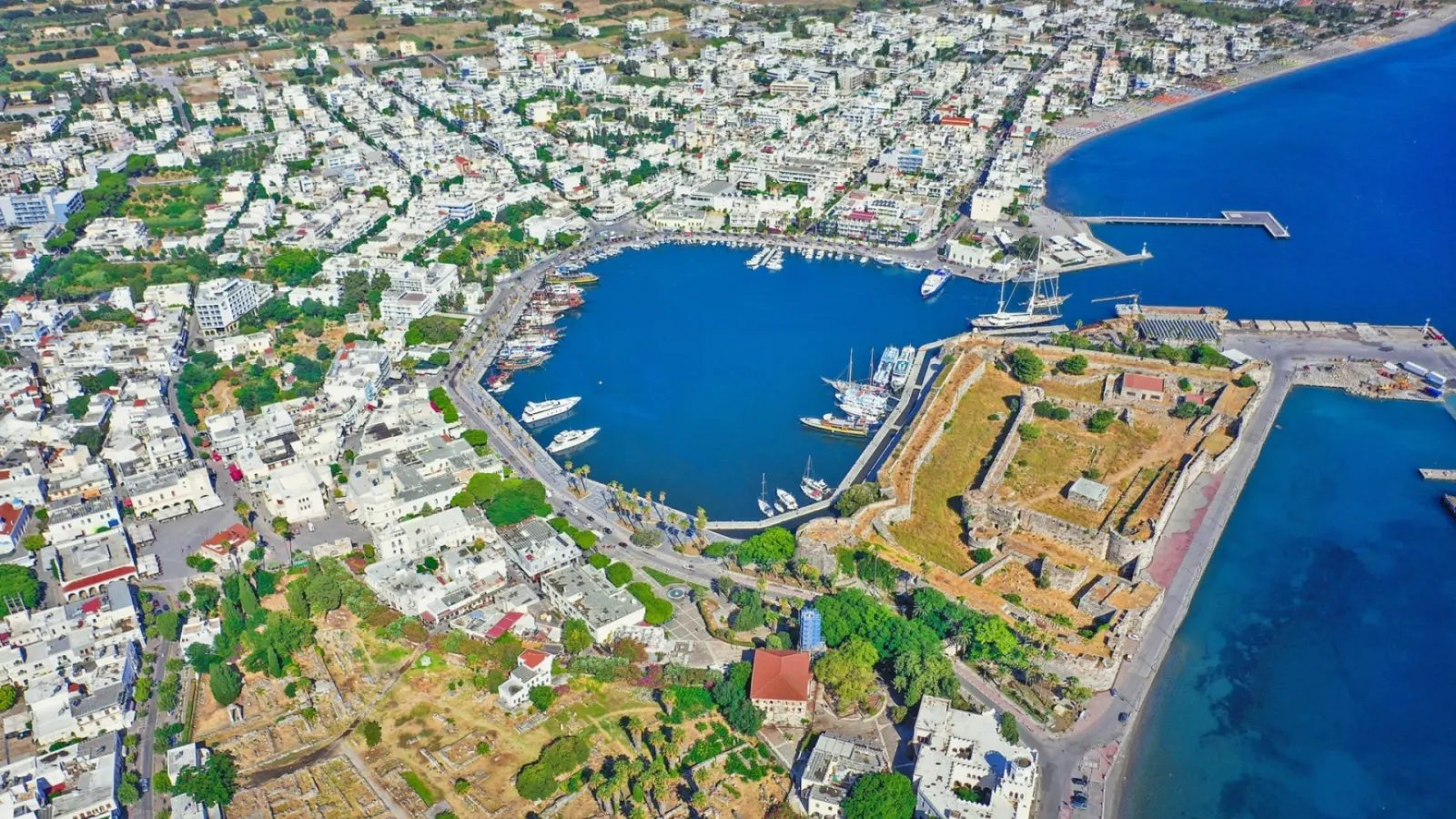
High-speed boats link Patmos with the other Dodecanese islands. Typical times are about 20 to 30 minutes from Lipsi, around 40 minutes from Leros, and roughly two to three and a half hours from Kos, depending on the vessel and the number of stops. From Rhodes the trip takes around four and a half hours on a fast boat and considerably longer on a conventional ferry. Seasonal services connect Patmos with Pythagorio on Samos. Timetables change every season and many routes thin out in winter, so always check the current sailings before you plan.
From Turkey
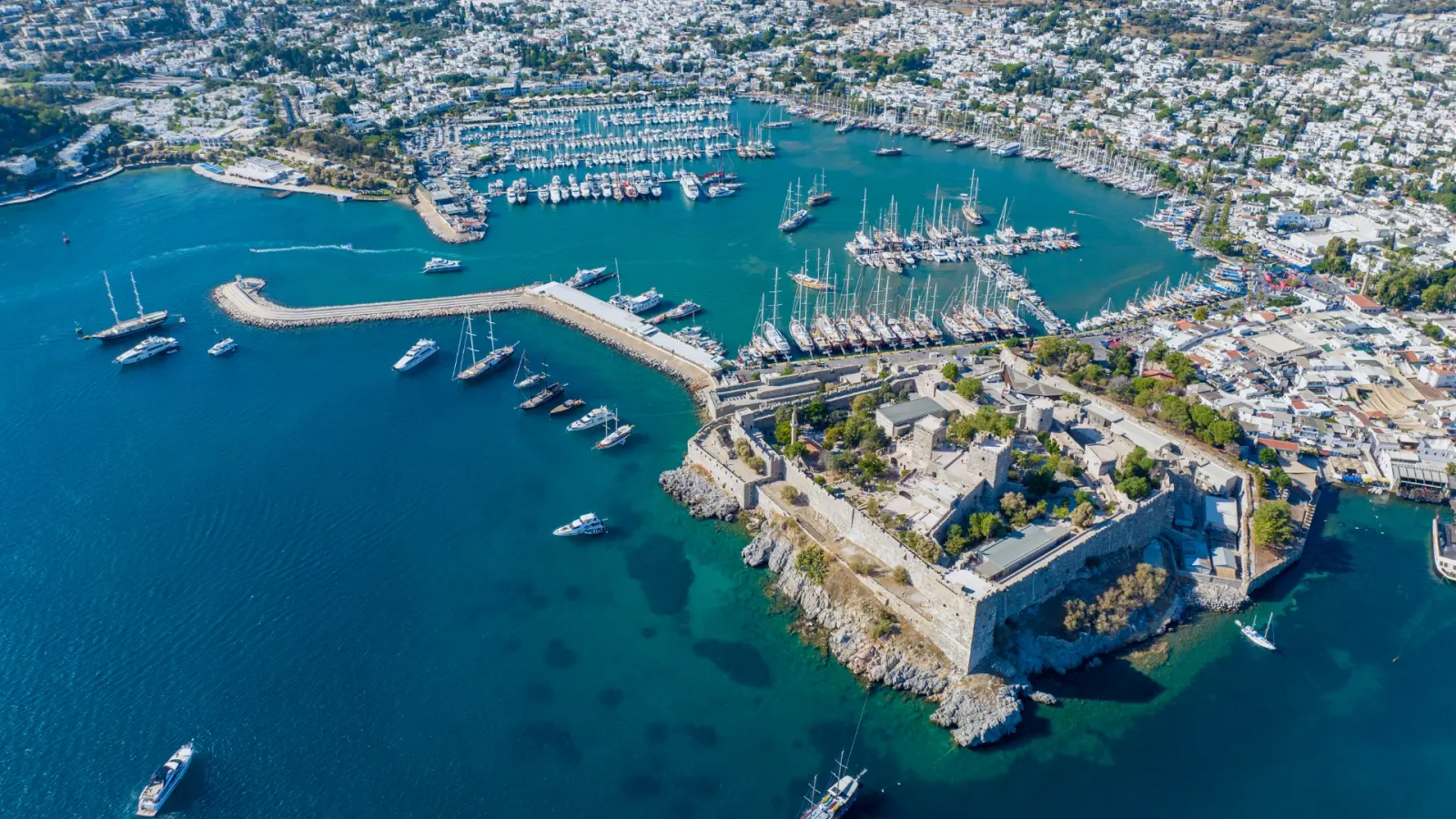
There is no year-round direct ferry from the Turkish coast. The most common route from Bodrum is to cross to Kos first (see our Kos island guide) and continue north by ferry. From Kuşadası, ferries cross to Samos, from where seasonal boats run to Patmos; in some summers there are also direct sailings from Kuşadası. Patmos is in the Schengen area: EU citizens need a passport or national ID card, and other travellers should check the current entry rules. Turkish citizens should check whether the express visa scheme for Greek islands applies to their route; Patmos is on the list of islands, but conditions can change.
By yacht or gulet
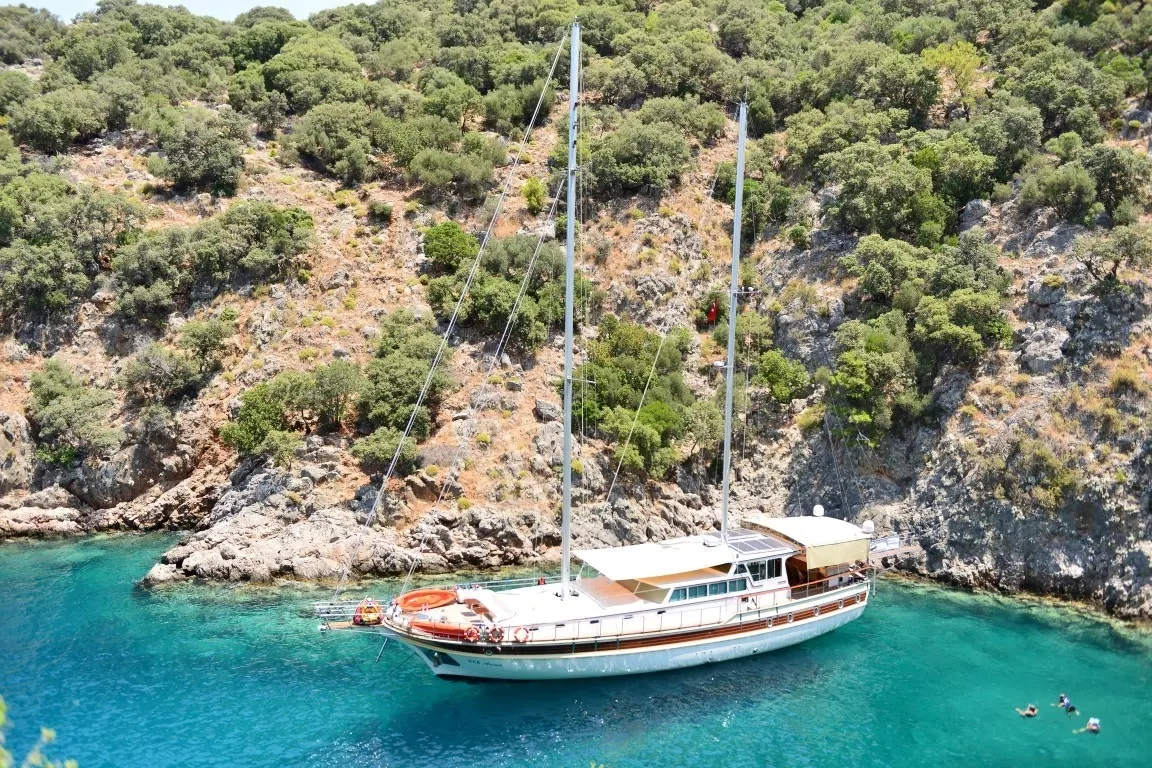
On a private gulet charter in Greece, Patmos is usually reached from Kos, Kalymnos or Leros, often with a stop at Lipsi or Arki on the way. If your charter starts in Bodrum, the crew clears out of Turkey and into Greece at an official port of entry such as Kos before heading north. On a boat you arrive the way the island was always approached: by sea, with the monastery appearing on the skyline long before the harbour.
Things to Do in Patmos
The Monastery of Saint John the Theologian
The monastery was founded in 1088 by the monk Christodoulos, after the Byzantine Emperor Alexios I Komnenos granted him the island. Its high walls and battlements were built to protect it from pirates, and from the sea it still looks more like a castle than a church. Inside are the main church with its frescoes, chapels and a museum that holds icons, liturgical objects and part of the monastery's collection of manuscripts.
In 1999, UNESCO listed the historic centre of Chora, together with the monastery and the Cave of the Apocalypse, as a World Heritage Site. Opening hours are short and usually limited to the morning; the monastery's own website lists 08:00 to 13:00, but times change with the season and religious holidays, so check locally before you go up.
The Cave of the Apocalypse
Halfway up the hill between Skala and Chora, a small monastery is built around the cave where, according to tradition, Saint John received the visions recorded in the Book of Revelation. The cave itself is a chapel and still in use, so visitors are asked to keep quiet. You can get there by bus, taxi or on foot: an old footpath climbs from Skala, and the walk takes about 20 minutes to the cave. Go early in summer, when it is cooler.
Chora
Chora is a maze of whitewashed lanes, small squares and stone mansions built by merchant and sea-captain families. It has been lived in continuously since the Middle Ages and is quieter than Skala, especially in the evening. Walk to the edge of the village for the view over Skala bay and the neighbouring islands, then stay for dinner in one of the squares.
Skala
Skala is the working heart of the island: the ferry quay, the yachts, cafés, tavernas, shops and the island's taxis and buses. Most visitors stay here or at one of the beaches nearby.
Beaches
Patmos has a mix of sand and pebble beaches, most of them small and spread around the coast:
- Psili Ammos: a sandy beach in the south, with no road to the shore. You reach it by boat from Skala or on foot, about a 30-minute walk from the end of the road.
- Lambi: in the north, known for its colourful pebbles, with a taverna by the shore.
- Agriolivadi: a sandy, organised bay north of Skala that gets busy in summer.
- Kambos: a sandy, organised beach in the north with water sports, popular with families.
- Grikos: a calm bay with a small resort south of Skala, about 4 km from Chora.
- Livadi Geranou: a sandy beach in the north facing the islet of Agios Georgios, which strong swimmers can reach.
Easter on Patmos
Orthodox Easter is a major event on Patmos. On Holy Thursday the ceremony of the Washing of the Feet (Niptiras) takes place in the main square of Chora, and the services of Holy Week fill the island's churches. If you plan to visit at Easter, book accommodation early.
Where to Anchor and Moor Around Patmos
On a gulet or motor yacht, Patmos offers a sheltered harbour and several anchorages for different winds.
- Skala: the deep bay of Patmos gives good shelter from the northerly meltemi. Yachts moor stern-to on the town quay, but in July and August berths fill up by late morning, so your crew will plan the arrival.
- Grikos: a short distance south of Skala, with good holding on sand in shallow water. It is a favourite for quiet overnight stays, although gusts can come down off the hills in a strong north-westerly.
- Psili Ammos: a good lunch stop in settled weather, with clear water off the sandy beach.
- Agriolivadi and Livadi Geranou: bays on the east coast north of Skala; Agriolivadi in particular is well sheltered from the prevailing north-westerly wind.
- Arki and Marathos: the tiny islands east of Patmos make an easy detour for a swim and a fish lunch.
As always in the Aegean, the final choice of anchorage depends on the wind on the day, and your captain will decide.
When to Go to Patmos
The main season runs from June to September. July and August are the busiest and hottest months, with the strongest meltemi winds and the most visitors in Skala. June and September offer warm sea, calmer conditions and fewer people, which makes them the best months for a cruise. May and October are quiet and pleasant for walking up to Chora, although the sea is cooler. Many hotels, tavernas and ferry connections operate only in season, so a winter trip needs more planning. Orthodox Easter is a special time to be on the island, but expect it to be busy.
Patmos on a Gulet Cruise
Patmos usually appears on northern Dodecanese routes:
- Kos, Kalymnos, Leros and Patmos: a week of harbours and swimming bays, with Kalymnos and Leros on the way north.
- Patmos, Lipsi and Arki: short hops between small islands, with quiet anchorages and fish tavernas.
- Bodrum, Kos and the northern islands: a two-country week that starts on the Turkish coast and crosses to Greece.
Gulets such as Good Life and Zelda are based in Kos, so Patmos is within easy reach on a week-long charter. Exact routes always depend on wind, the boat and border formalities; your captain will adapt the plan day by day.
Practical Tips for Patmos
- Dress code: at the monastery and the Cave of the Apocalypse, shoulders and knees must be covered. Bring a light shirt and long trousers or a skirt, even on a beach day.
- Opening hours: the monastery and the cave usually open in the morning only. Times change with the season and religious holidays.
- Getting around: buses link Skala with Chora and some beaches, and taxis wait in Skala. To explore the beaches on your own, rent a car or scooter, or use the boats from Skala.
- Currency: Greece uses the euro. If you cross from Turkey, carry some euros.
Explore Patmos by Yacht
Patmos is a small island where the sea route matters as much as the destination: Lipsi or Arki on the way, the monastery appearing above the hills, a morning in Chora and an evening at anchor in Grikos. Barbaros Yachting charters can start from Kos or cross over from Bodrum, with the crew handling passports and port clearance. Browse the gulet charter in Greece fleet or our options for yacht charter in Greece, and tell us which islands you would like to see.
FAQ
Does Patmos have an airport? No. The nearest airports are on Leros, Samos and Kos. From there you continue to Patmos by ferry; the crossing from Leros takes around 40 minutes on a fast boat.
How do I get to Patmos from Turkey? The most common route from Bodrum is the ferry to Kos and then a ferry north to Patmos. From Kuşadası you can cross to Samos and continue by a seasonal boat; some summers also have direct sailings. On a private yacht, the crew handles the border formalities.
What is Patmos famous for? For the Monastery of Saint John the Theologian and the Cave of the Apocalypse, where according to tradition Saint John received the visions of the Book of Revelation. Together with the historic centre of Chora, they have been a UNESCO World Heritage Site since 1999.
Is there a dress code for the monastery on Patmos? Yes. At both the monastery and the Cave of the Apocalypse, shoulders and knees must be covered. Opening hours are usually limited to the morning and change with the season.
Which are the best beaches on Patmos? Psili Ammos in the south is a sandy beach reached by boat or on foot. Lambi is known for its colourful pebbles, while Agriolivadi and Kambos are sandy, organised bays in the north.