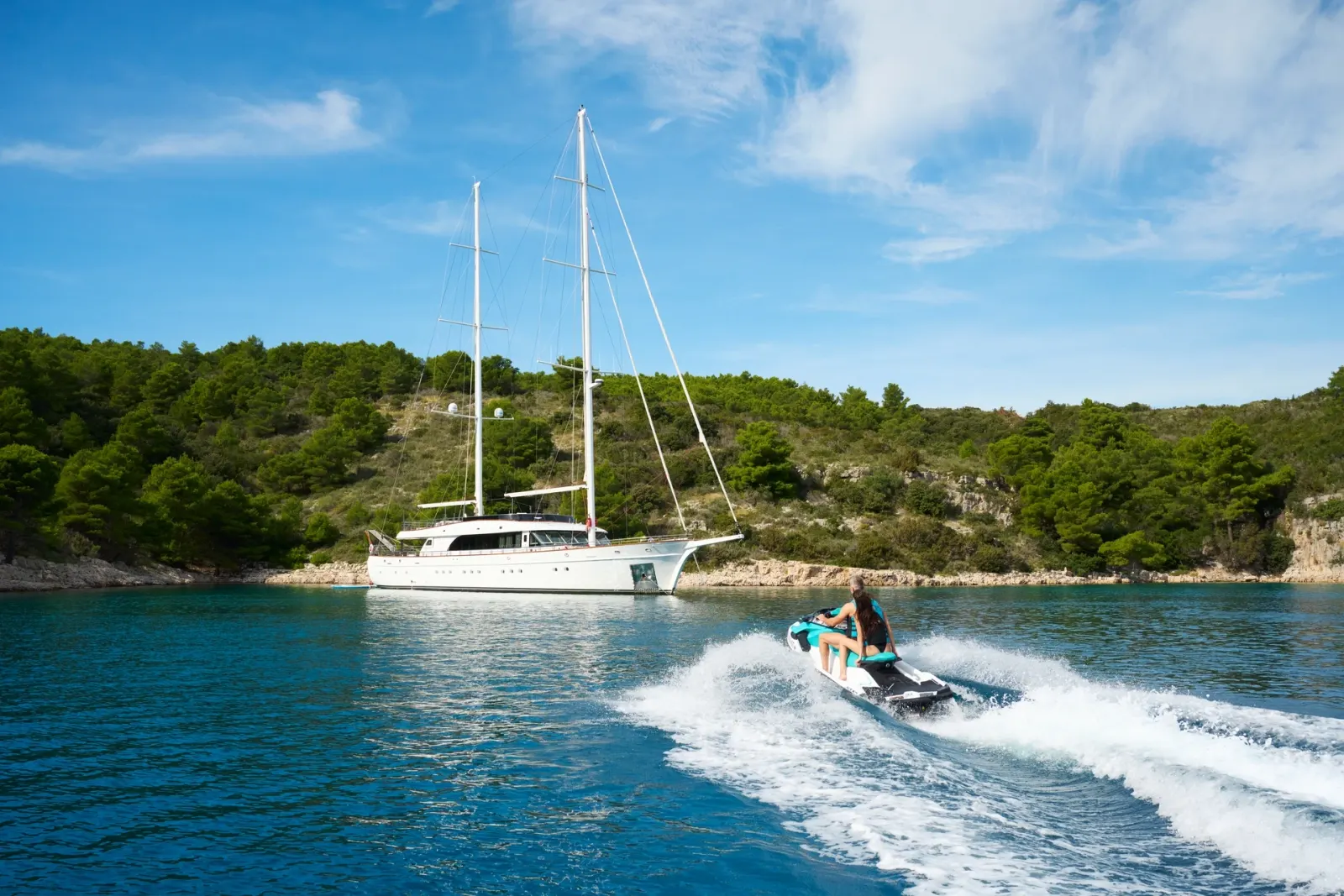
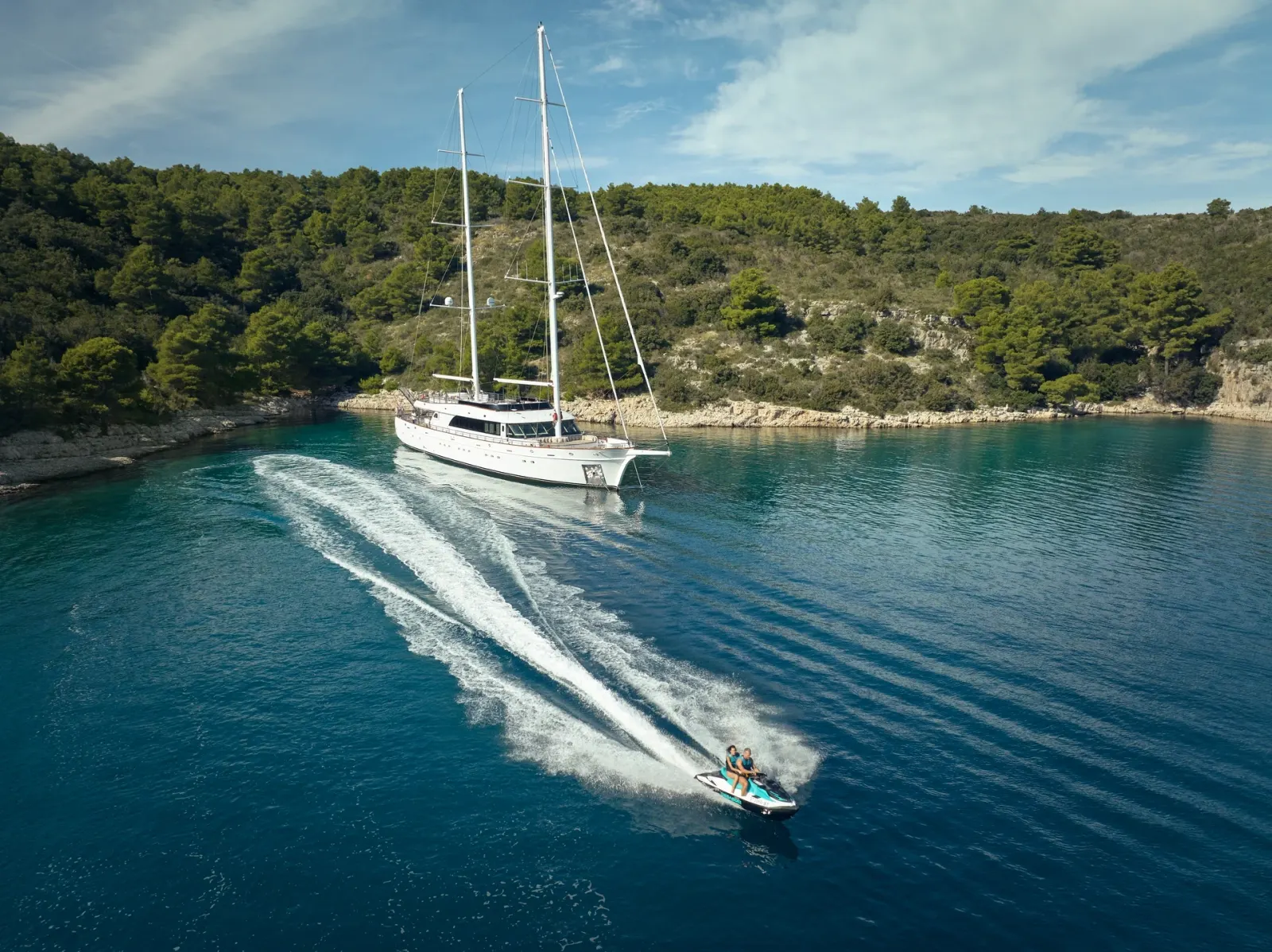
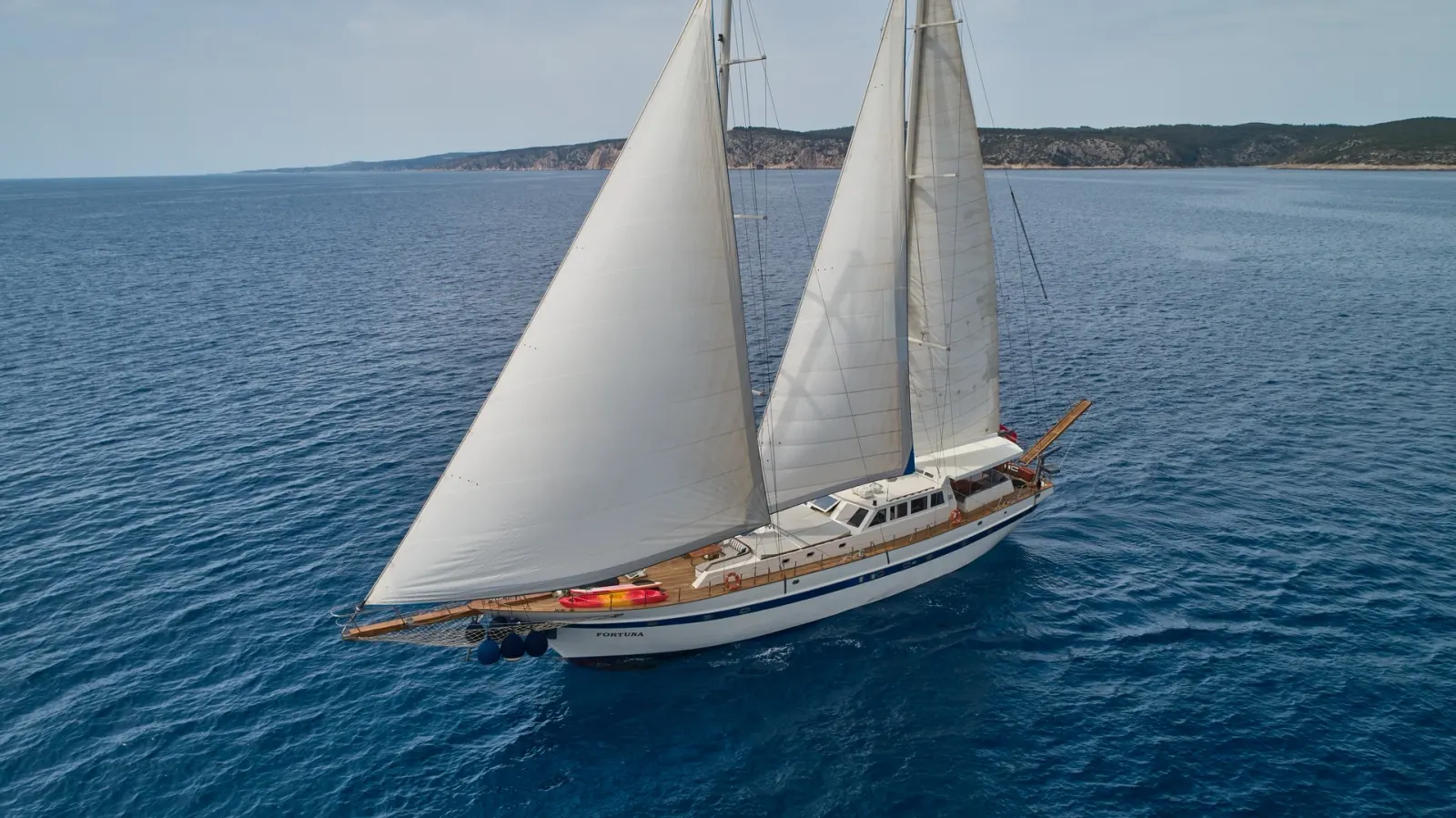
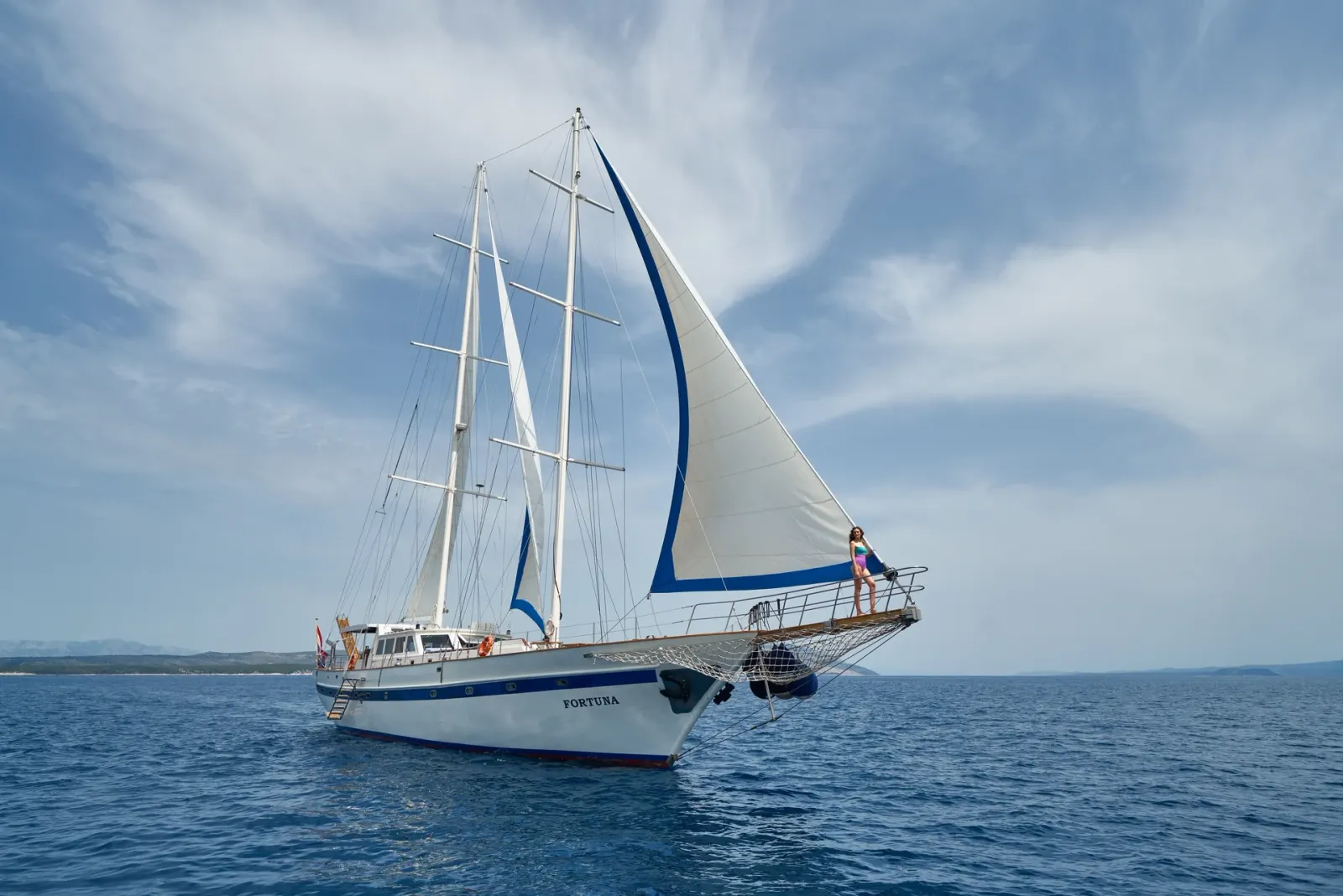
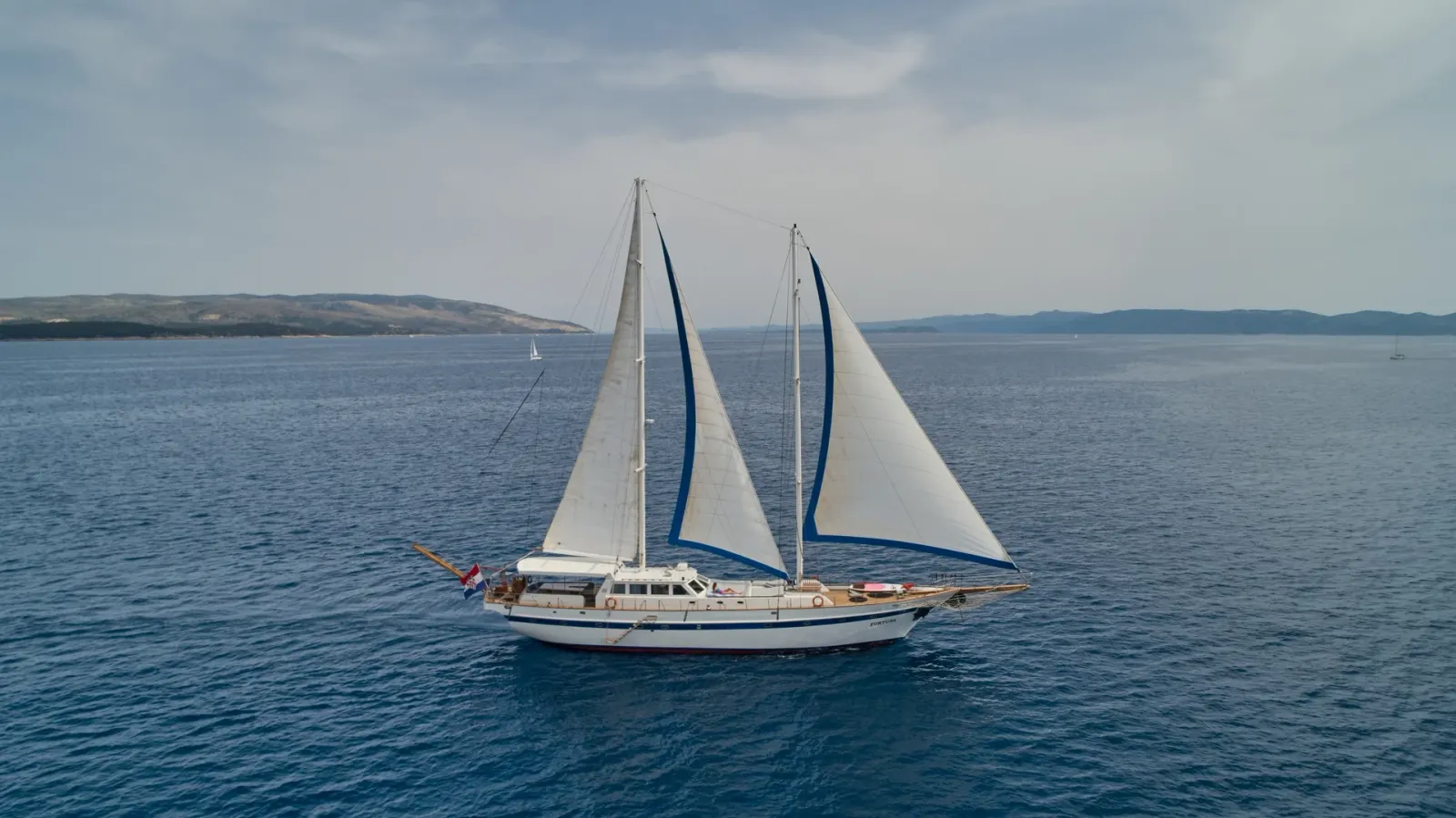
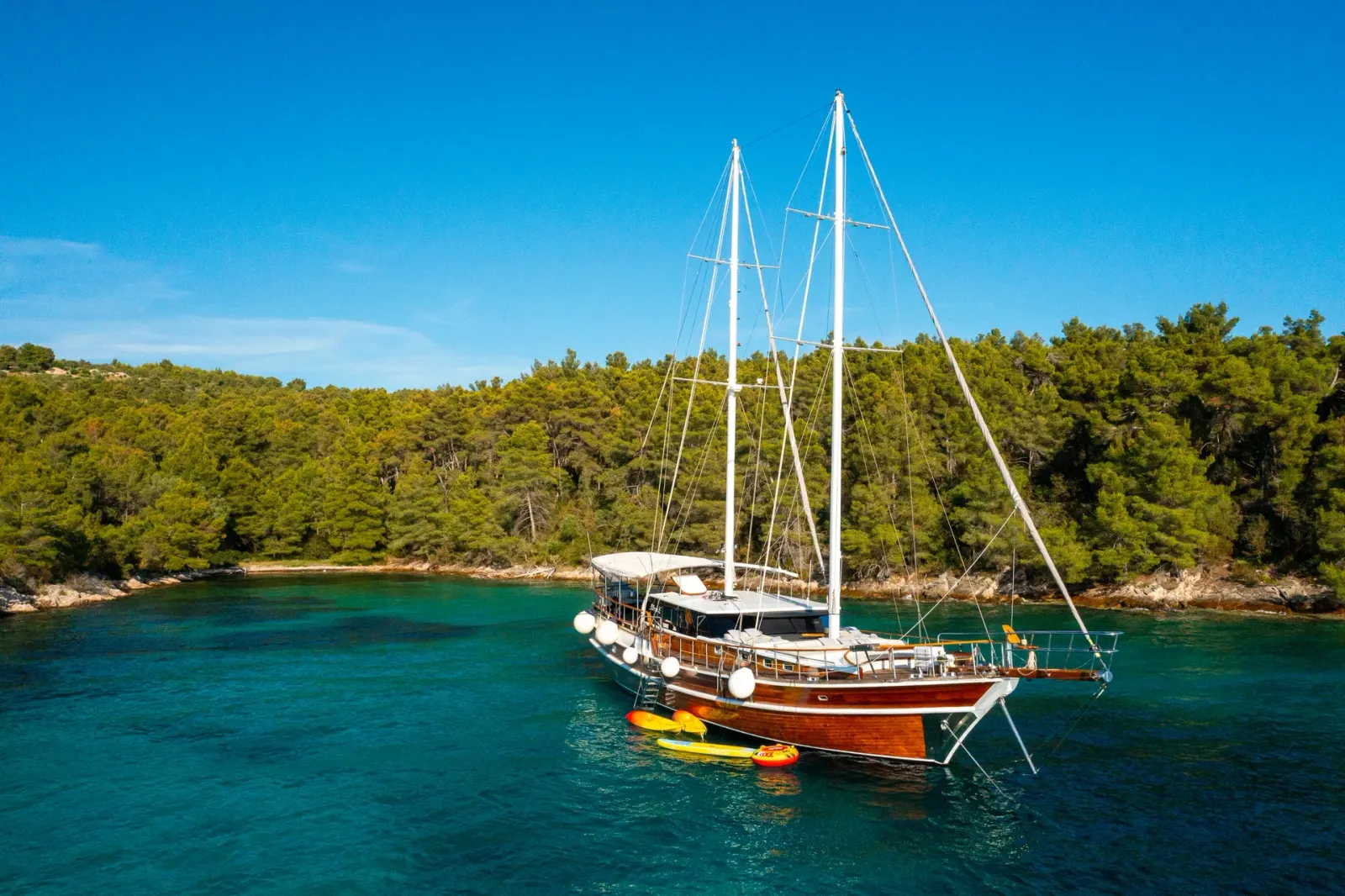
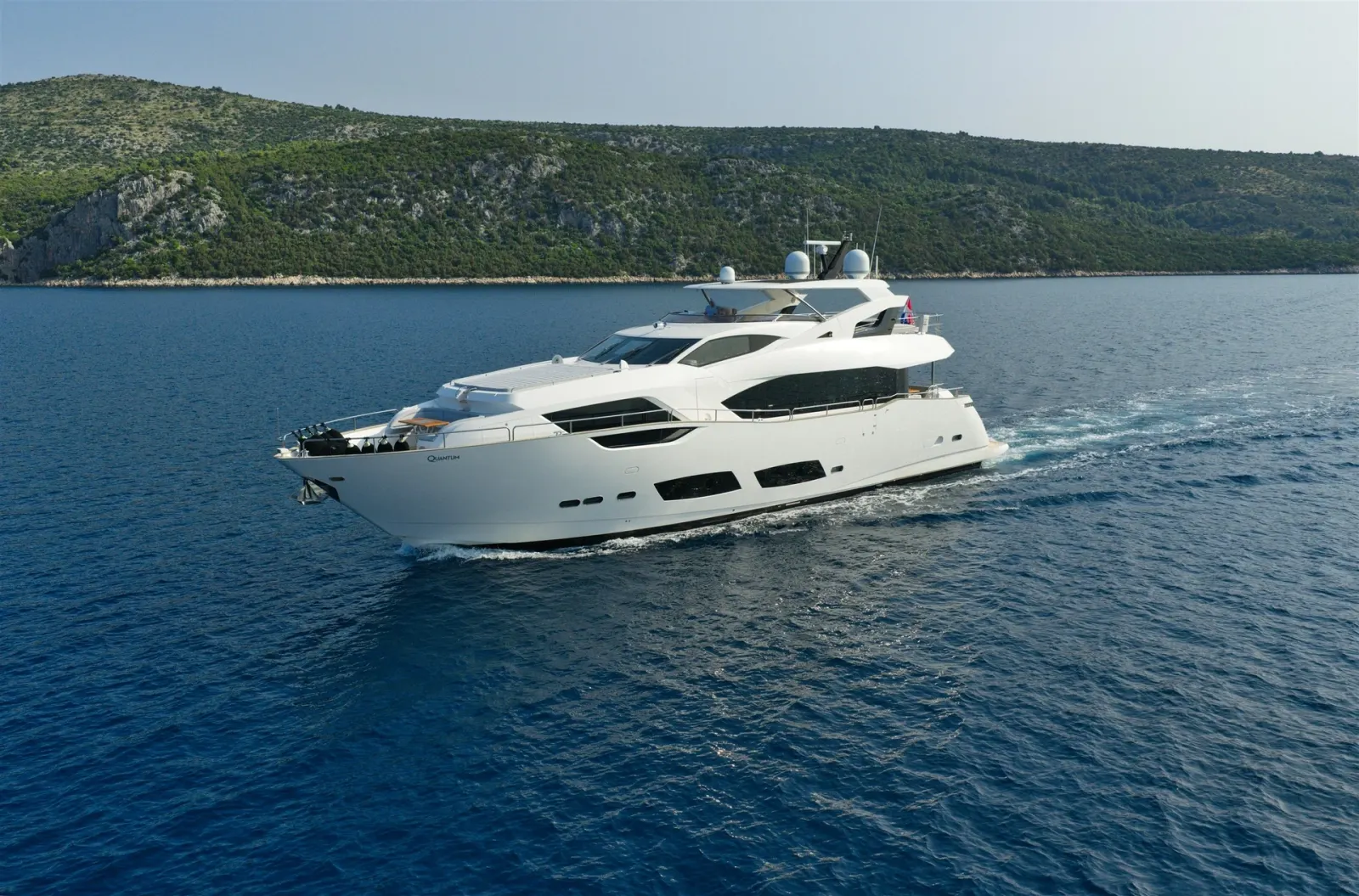
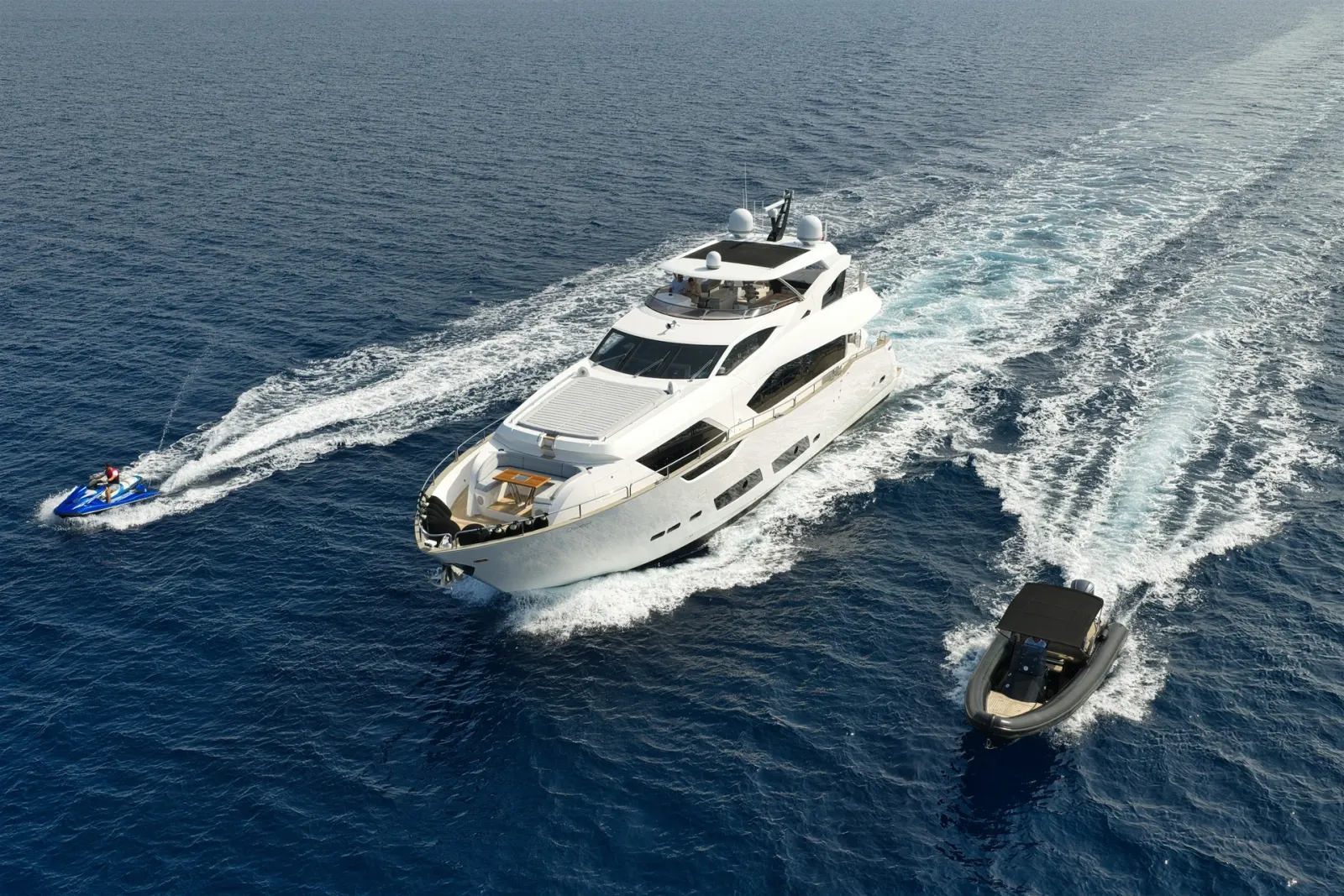
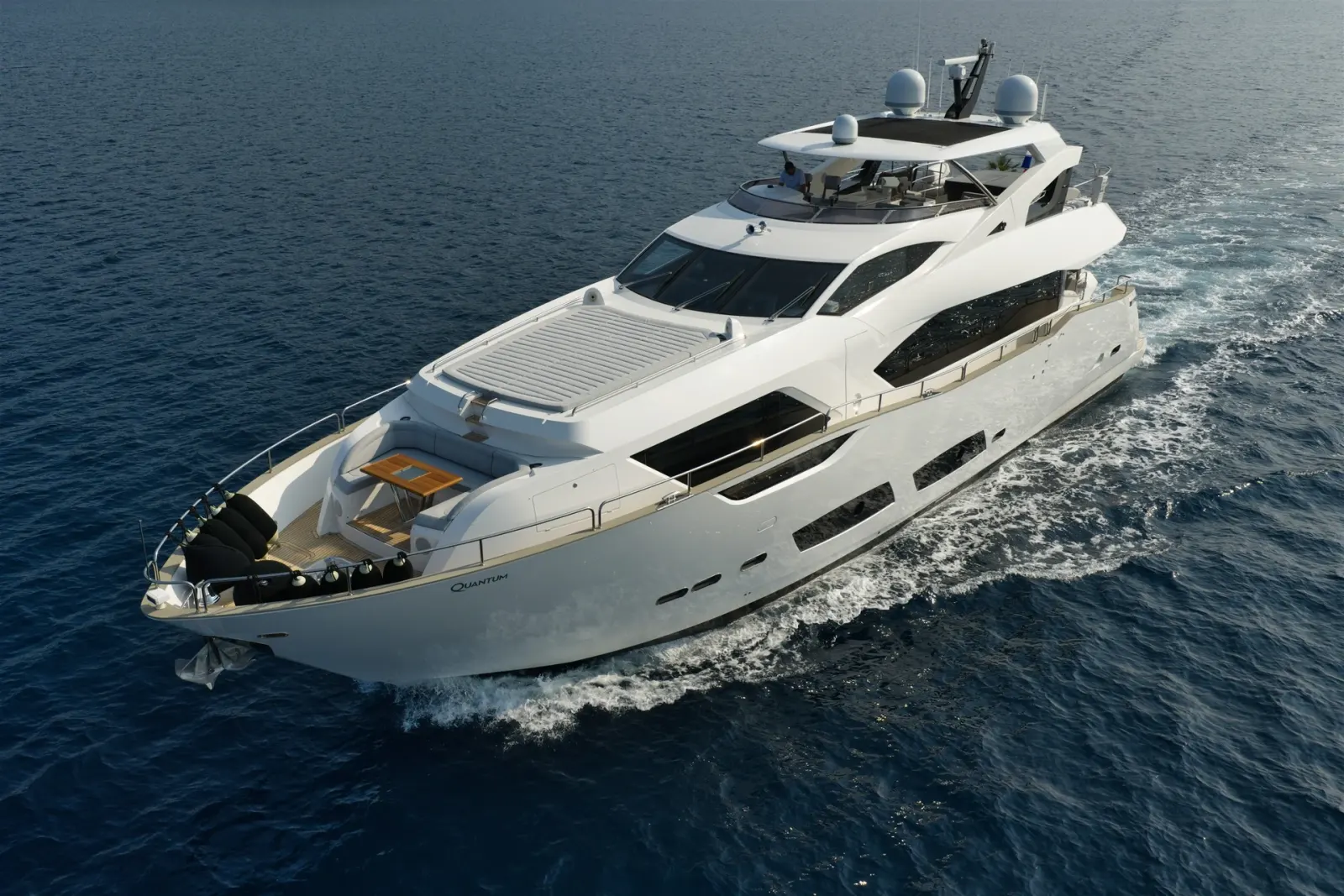
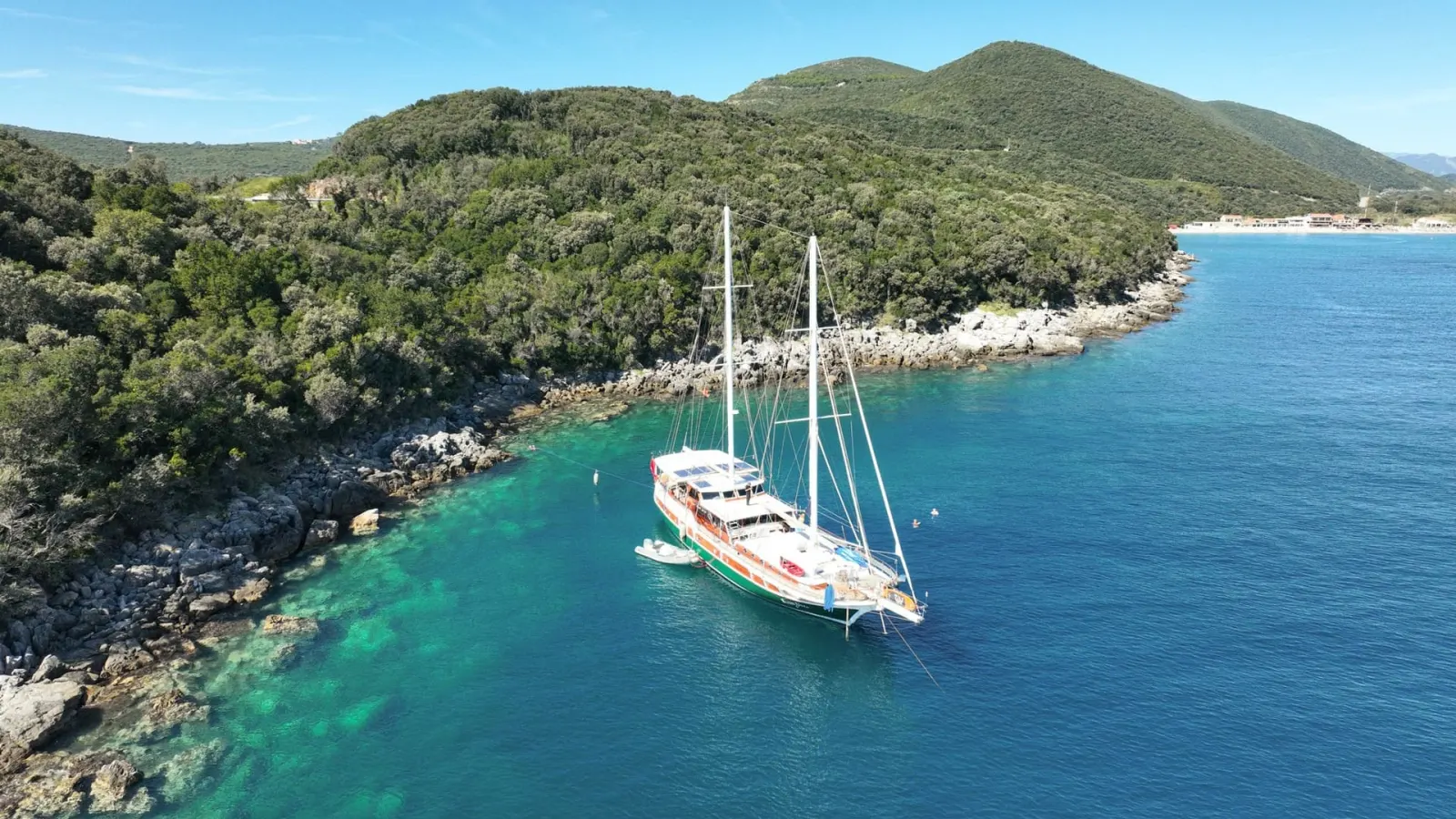
A yacht charter in Croatia means a week among the Dalmatian islands with a professional crew doing the sailing: Hvar and the Pakleni islands, Vis and its sea caves, the walled towns of Korčula and Dubrovnik, and evenings in harbours where the boat moors a few steps from a stone waterfront. Every yacht on this page is chartered with captain and crew, so nobody in your group needs a licence or sailing experience.
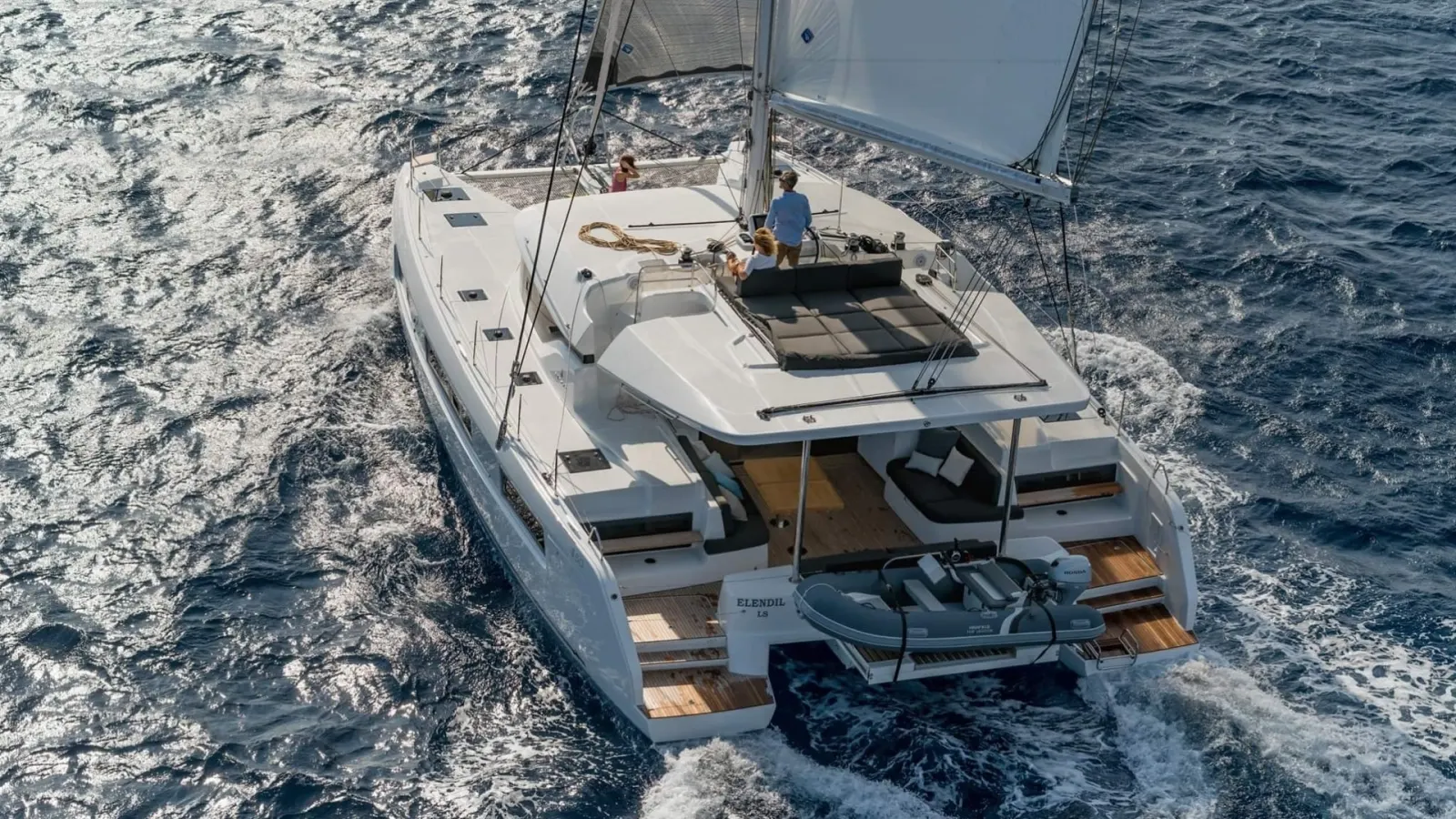
Our Croatian fleet is built around three kinds of boat. Gulets, the wide-decked wooden motorsailers that suit families and groups of friends; motor yachts, from compact 20-metre boats to 50-metre-plus yachts for larger parties; and catamarans for those who want stability, space and shallow-water anchorages. Most of the yachts are based in Split and Dubrovnik, with others in Trogir, Šibenik, Zadar and on the Makarska Riviera, and a smaller group sits across the border in Montenegro’s Bay of Kotor.
A charter is booked for the whole yacht, usually by the week. You choose the yacht, the dates and the stretch of coast; the captain plans each day around the wind, the anchorages and what your group enjoys. Below you will find the yachts we can offer in Croatia and Montenegro, the weekly price range of the yachts with a published rate, the classic routes and the questions guests ask us most.
Crewed yacht charter in Croatia: how it works
Croatia is one of Europe’s busiest charter coasts, and most of the boats you see in its marinas are rented bareboat: a group with a licensed skipper of its own takes a sailing yacht or catamaran for a week. A crewed charter is different. The yacht comes with a captain and, depending on its size, a deckhand, a chef, a hostess or a full crew of a dozen. They handle the navigation, mooring, cooking and cleaning; you decide where to swim, how long to stay and when to go ashore.
Every yacht we list in Croatia is a crewed yacht. That is why the page talks about gulets and motor yachts rather than about cheap sailing boats: the crew, the space on board and the comfort of the cabins are what you are paying for. It also changes the rhythm of a week. A crewed yacht can make an early passage while you have breakfast, anchor off a beach that charter flotillas skip, and moor in town for dinner without anyone in your group touching a rope.
The yachts on this page are based in Croatia and Montenegro, but a yacht is not tied to its home marina. Departures from another Dalmatian port and one-way charters (Split to Dubrovnik, for example) are often possible; availability and any repositioning are confirmed when we prepare your quote.
Quick facts
At a glance
The essentials of chartering with us, at a glance.
68Yachts available
€8,500 – €74,000Weekly price range · whole boat
8.7 / 10Average guest rating · 240 reviews
20–50 mTypical length
4–6 (up to 18)Cabins
8–12 guestsSleeps
June–SeptemberBest season
Guest reviews
What our guests say
Reviews from guests who chartered yachts listed on this page.
WE
William E.
★8/10·
Got everything we came for; the captain found us shelter when the meltemi picked up — the swim stop at Bodrum was unreal, and Mustafa sorted everything before we'd even asked.
Seven nights aboard Smart Spirit and we'd do it all again… we anchored off Göcek and had it to ourselves. Coffee on deck at sunrise is hard to beat. We'll be back, no question.
Honestly a wonderful holiday. The water was so clear you could count the fish. We anchored off Fethiye and had it to ourselves, and Ayşe grilled the day's catch right on deck. Lovely from start to finish, thank you.
Couldn't fault a single thing — Lucia looked after us like family — fresh figs and watermelon on the back deck as the sun went down. Cristal felt like a proper home on the water
Split is the centre of the Croatian charter fleet and the base of most of our yachts. Its marinas and the town harbour sit next to Diocletian’s Palace, and Split airport (SPU) is half an hour away, close to Trogir and Kaštela. From Split the central Dalmatian islands are within a morning’s cruise.
Dubrovnik (airport DBV) is the second base, with yachts in Gruž and the marina up the Rijeka Dubrovačka inlet; it is the natural start for the Elaphite islands, Mljet, Korčula and Montenegro. Further north, Trogir, Šibenik and Zadar (airport ZAD) open onto Krka, the Kornati and the islands of northern Dalmatia, and a few yachts start from Baška Voda on the Makarska Riviera.
The home port shown on each yacht is where it is registered, not the only place it can start. Tell us where you would like to embark and disembark and we will check which yachts can do it.
02
Central Dalmatia from Split: Brač, Hvar, Vis and Šolta
The classic Split week stays among the islands closest to the city. Brač is the first stop for many groups, with the village of Milna in its western bay and the long pebble spit of Zlatni Rat at Bol on its southern shore. Hvar town is the liveliest harbour on the coast; most crews anchor in the Pakleni islands opposite, where the water is calmer and the bays are greener, and take guests into town by tender.
Vis lies further out and feels quieter: the fishing village of Komiža, the cove of Stiniva reachable only by sea or a steep path, and the Blue Cave on the islet of Biševo, best visited early in the day. Šolta, a short hop from Split, makes a gentle first or last night. A typical loop is Split – Brač – Hvar – Vis – Šolta – Split, with the order set by the wind.
03
Southern Dalmatia from Dubrovnik: Elaphites, Mljet and Korčula
From Dubrovnik the first day is often spent among the Elaphite islands: Koločep, Lopud with its sandy bay at Šunj, and Šipan, the largest of the three. Mljet has a national park at its western end, with two saltwater lakes and a Benedictine monastery on an islet, and quiet anchorages at Polače and Pomena.
Korčula’s walled old town sits on a peninsula and is one of the prettiest places on the coast to moor for the night. The Pelješac peninsula opposite is known for its wines and for the oysters of Ston. Further out, Lastovo is a nature park with few visitors and very clear water. A week from Dubrovnik usually returns via Cavtat or ends in the city itself.
04
Split to Dubrovnik: the one-way week
Many guests prefer a one-way charter that links the two main bases: Split – Brač – Hvar – Vis or Korčula – Mljet – Elaphites – Dubrovnik, or the same in reverse. You see more of the coast without retracing your route, and you can fly into one airport and out of the other.
A one-way charter usually means the yacht has to return to its base, so the quote may include a repositioning fee or be offered on dates when the yacht is moving anyway. We check this yacht by yacht; sometimes the best-value option is a yacht based at the far end of your route.
05
Northern Dalmatia: Šibenik, Krka and the Kornati
From Šibenik or Trogir a yacht can head up the Krka estuary to Skradin, the gateway to the waterfalls of Krka National Park, and out to the Kornati, a national park of more than a hundred bare limestone islands where the restaurants are reached by boat. Primošten and the small islands of Zlarin and Prvić are pleasant stops on the way.
From Zadar, the Telašćica nature park on Dugi Otok and the northern Kornati are the highlights. Northern Dalmatia is quieter than the Split–Hvar corridor in high summer, which suits groups who want more anchorages and fewer crowds. National park entry fees are usually paid locally.
06
Montenegro and the Bay of Kotor
South of Dubrovnik, the Bay of Kotor cuts deep into the mountains of Montenegro. A charter here combines the small baroque town of Perast and the islet church of Our Lady of the Rocks, the walled old town of Kotor at the far end of the bay, the marinas of Tivat and Portonovi, and Herceg Novi near the entrance. Outside the bay, Budva and the island village of Sveti Stefan are within a day’s cruise.
Our Montenegrin yachts are listed separately below the Croatian ones. Montenegro uses the euro but is not in the EU or the Schengen area, so a week that crosses between Dubrovnik and the bay involves border formalities: the yacht has to clear out of one country and into the other at an official port of entry, and every guest needs a valid passport and, depending on nationality, a visa. Whether a crossing is possible with a given yacht, the route and the formalities are confirmed at the quote stage.
07
Gulets in Croatia
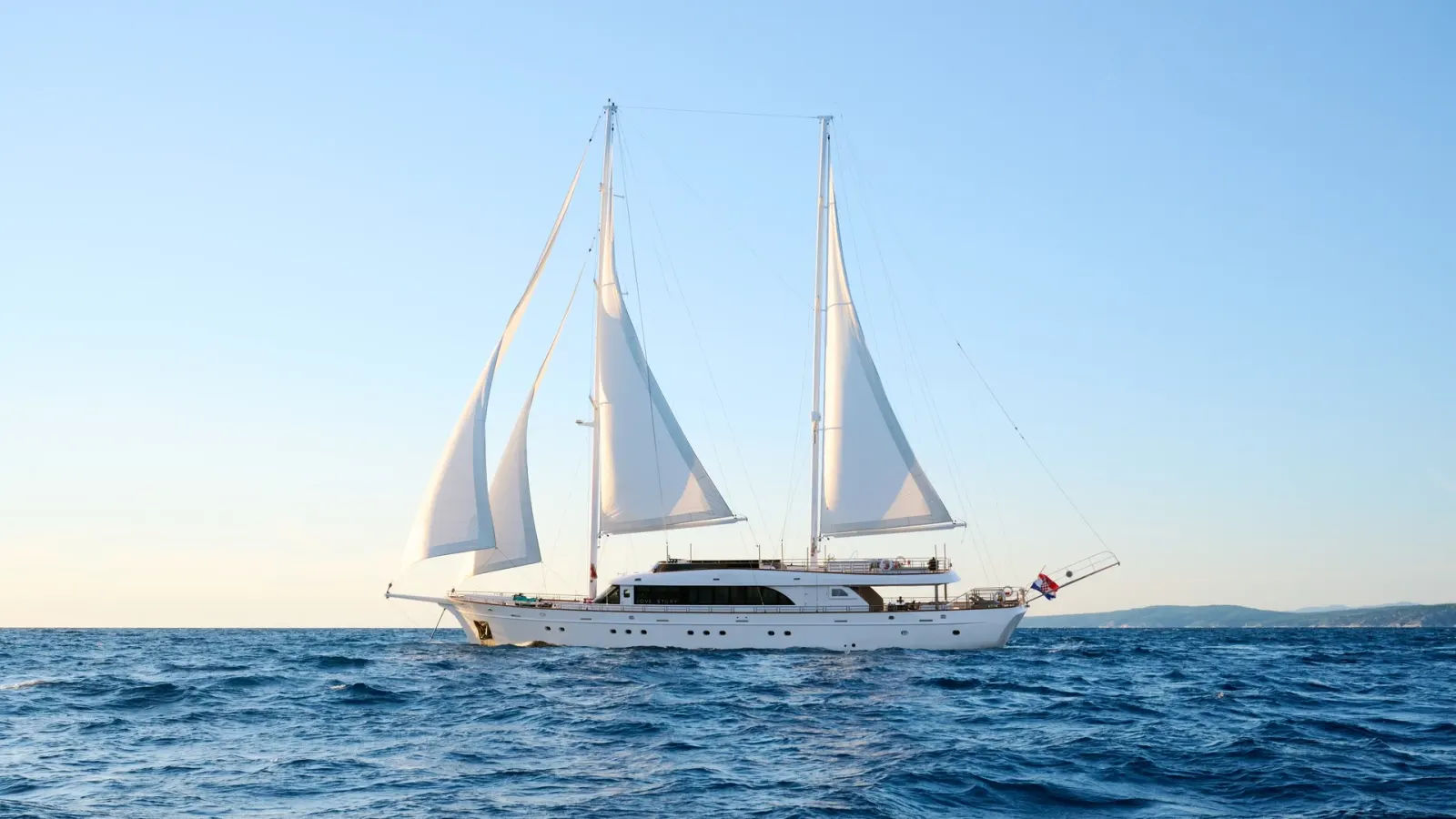
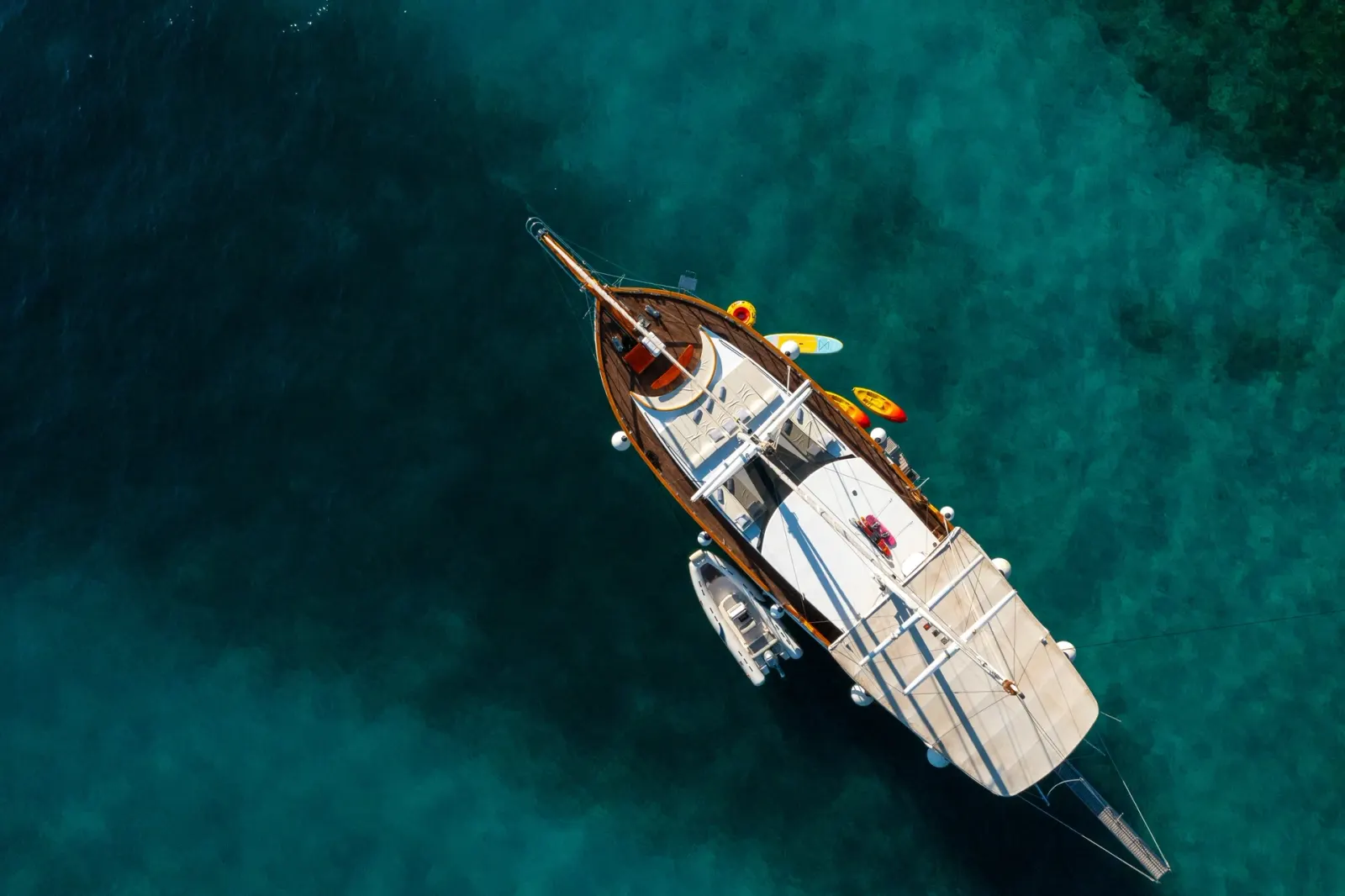
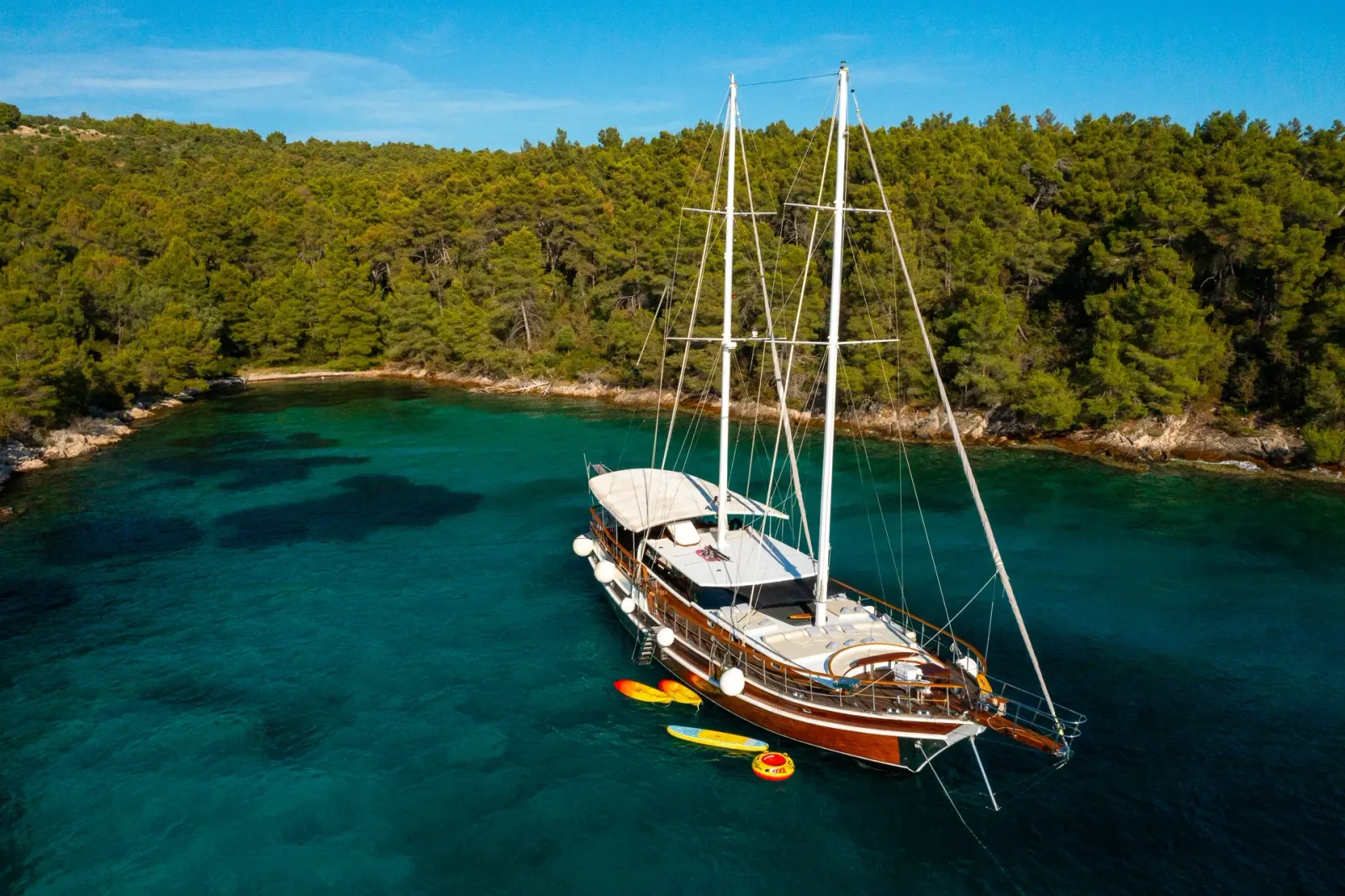
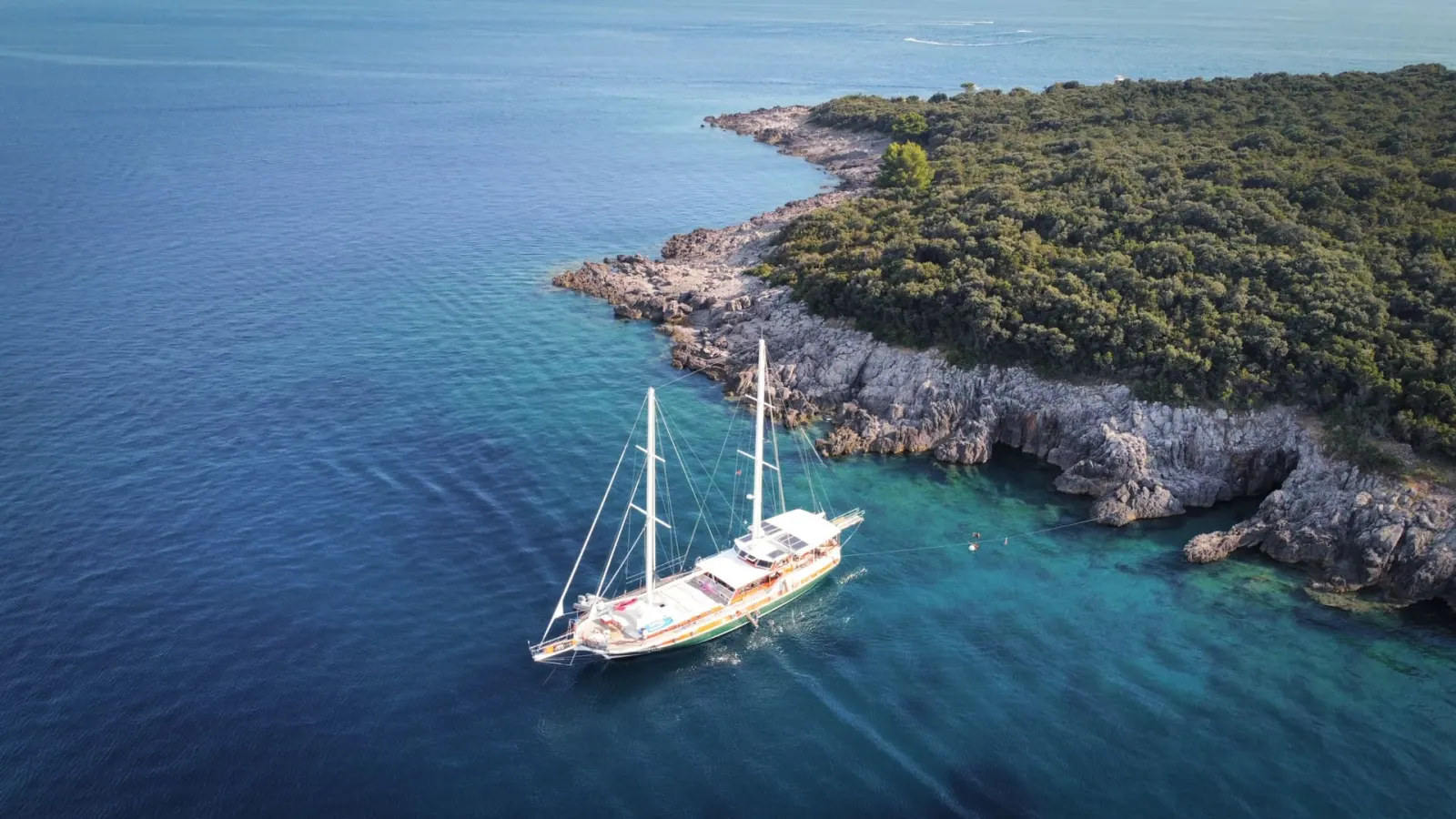
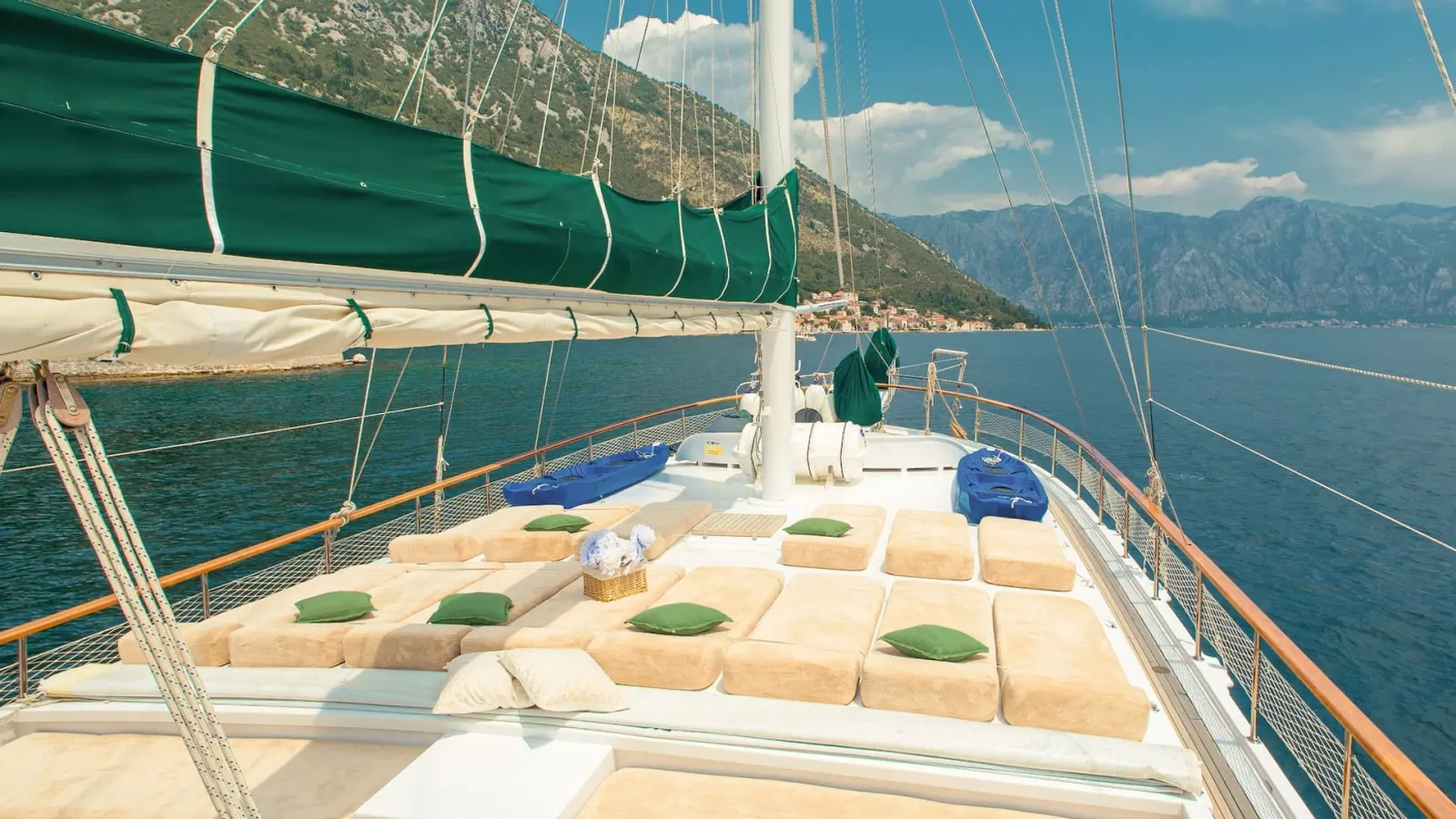
The gulet is best known from the Turkish coast, but Croatia has its own fleet of large wooden motorsailers built in the same spirit, often 30 to 49 metres long with six cabins, wide sun decks and a big shaded table aft. They are among the most popular boats for families and groups of friends who want to spend the week together in comfort rather than chase speed.
A Croatian gulet cruises mostly under engine and raises its sails when the wind allows. Its crew of four to ten usually includes a cook, and meals on deck are a large part of the week. If you are comparing gulets, look at cabin layout (all doubles, or some twins for children), air conditioning, the size of the tender and the water toys on board.
08
Motor yachts and catamarans
A motor yacht covers more distance in less time, which matters on a one-way week or if you want to reach Vis, Lastovo or Mljet without long passages. Our Croatian motor yachts range from compact boats for a family of six or eight to large yachts with a dozen crew; a few of the biggest, sometimes called mini-cruisers, have 14 to 18 cabins and are built for large groups and celebrations.
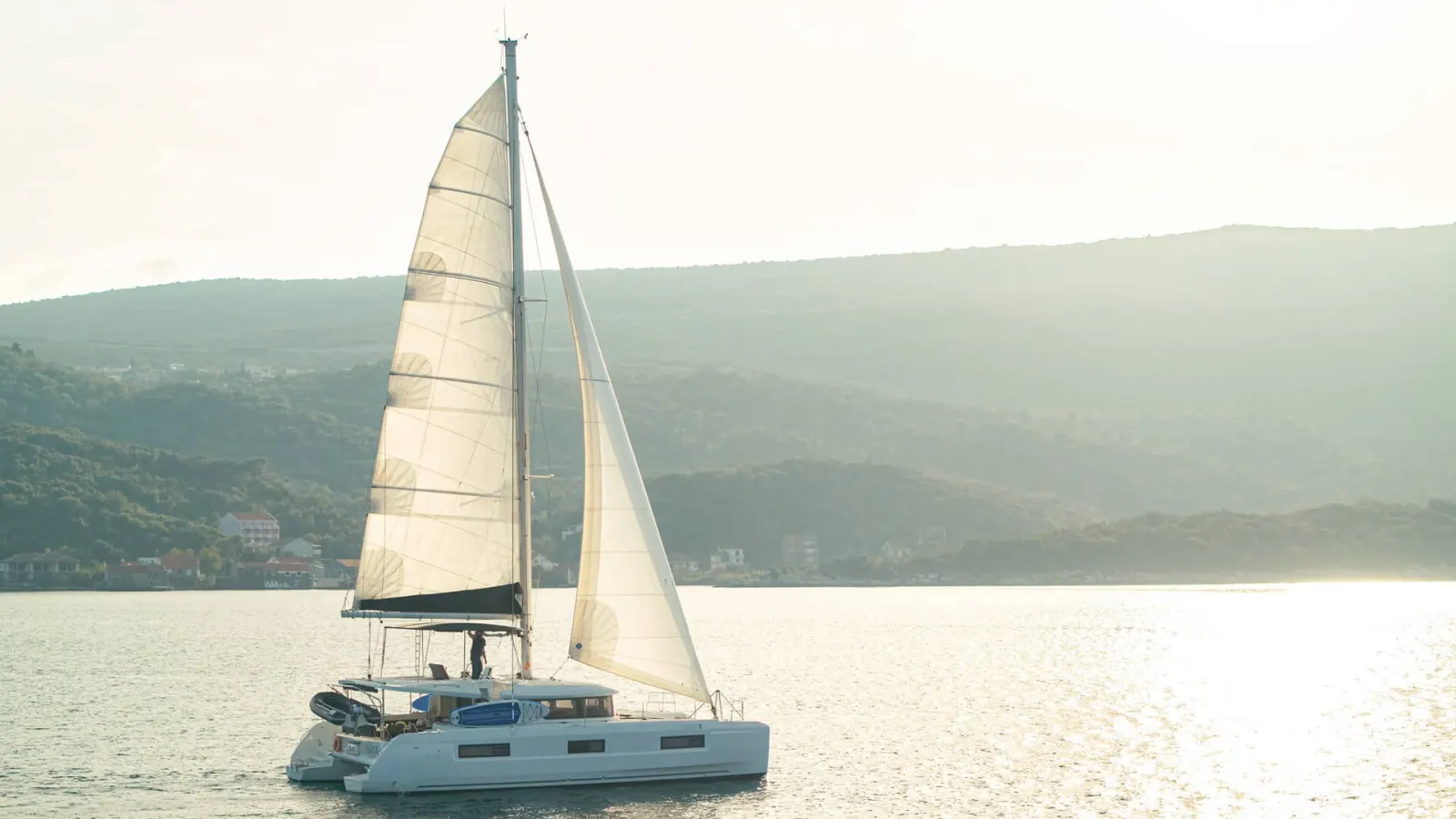
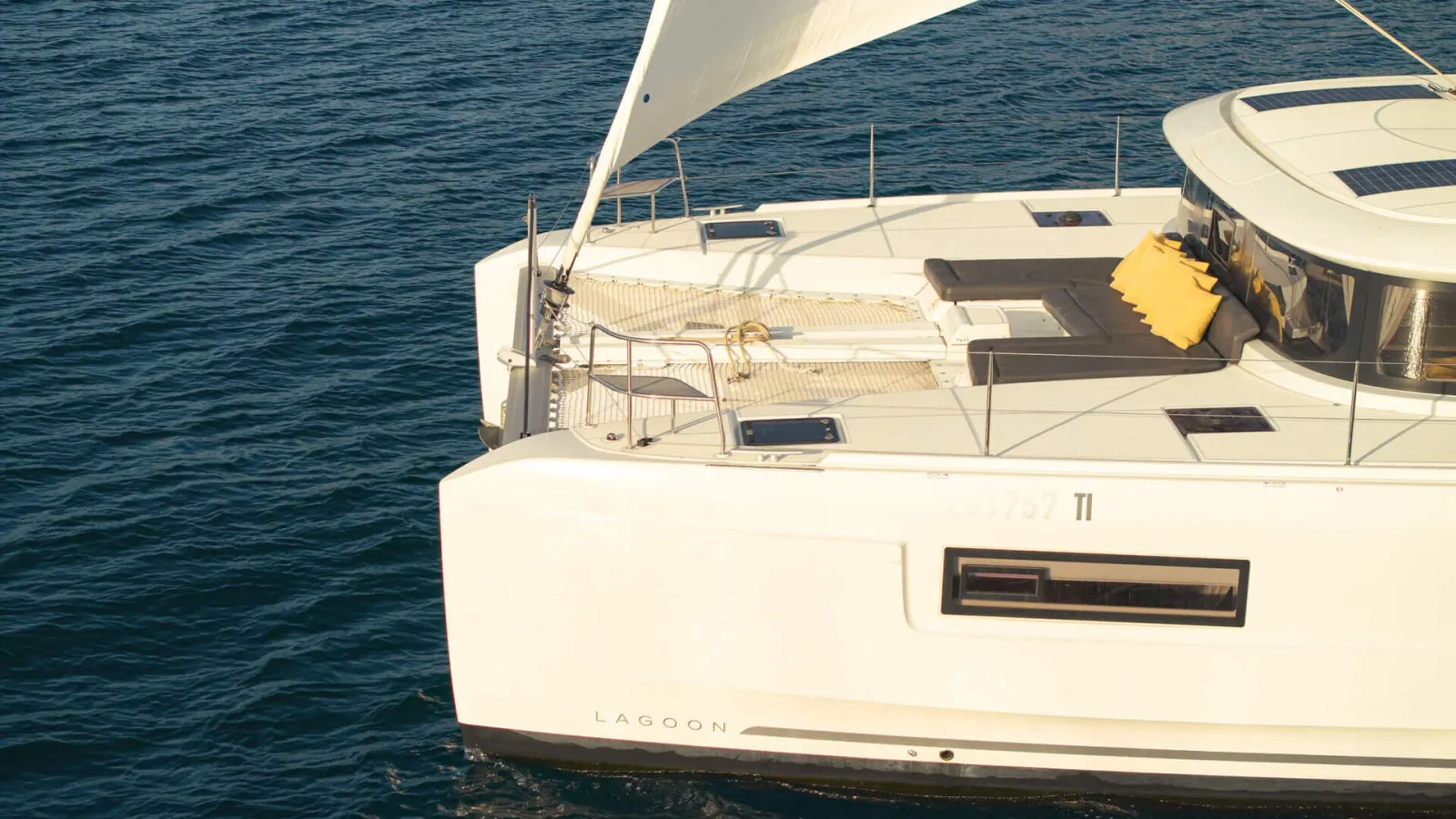
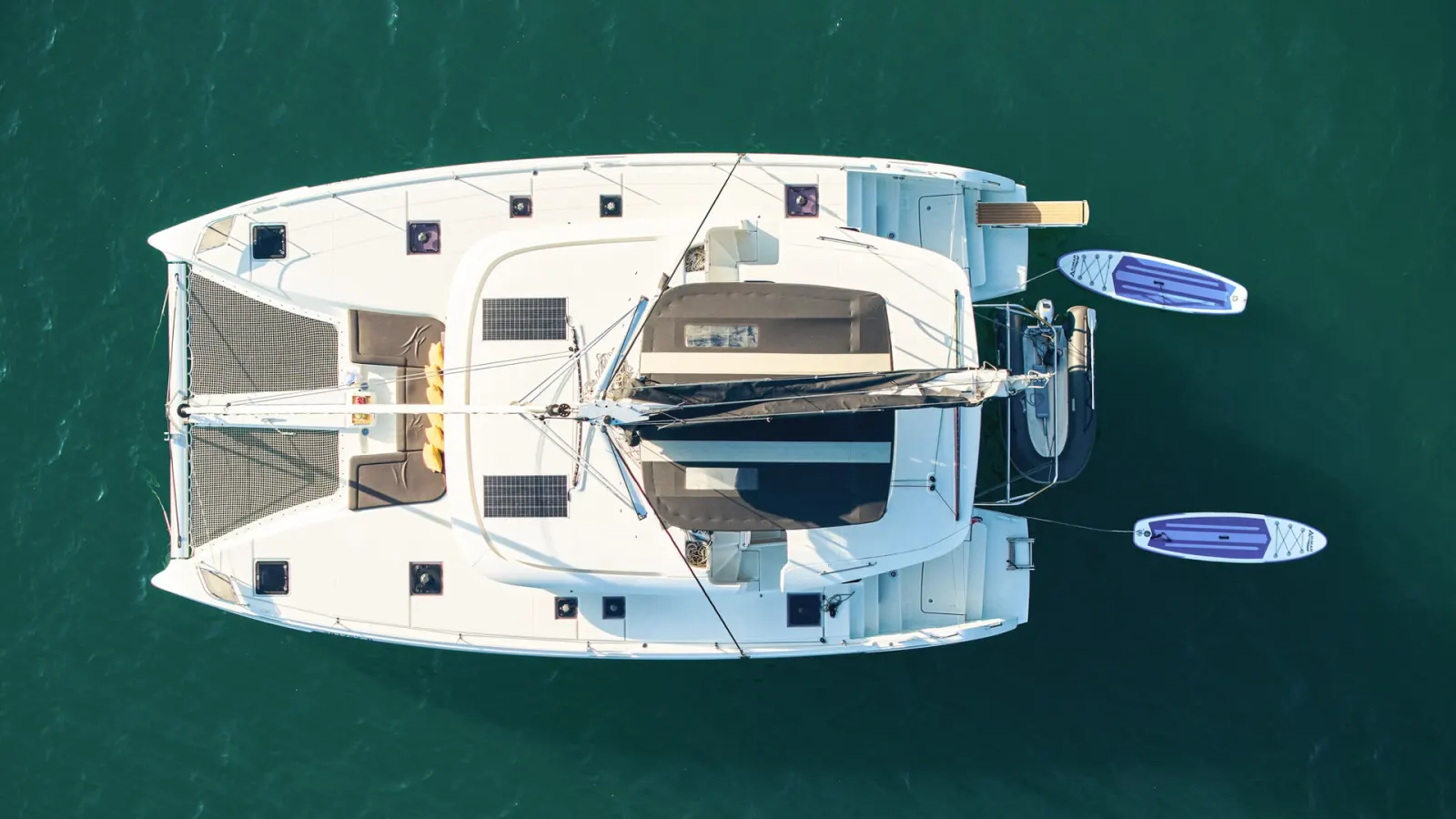
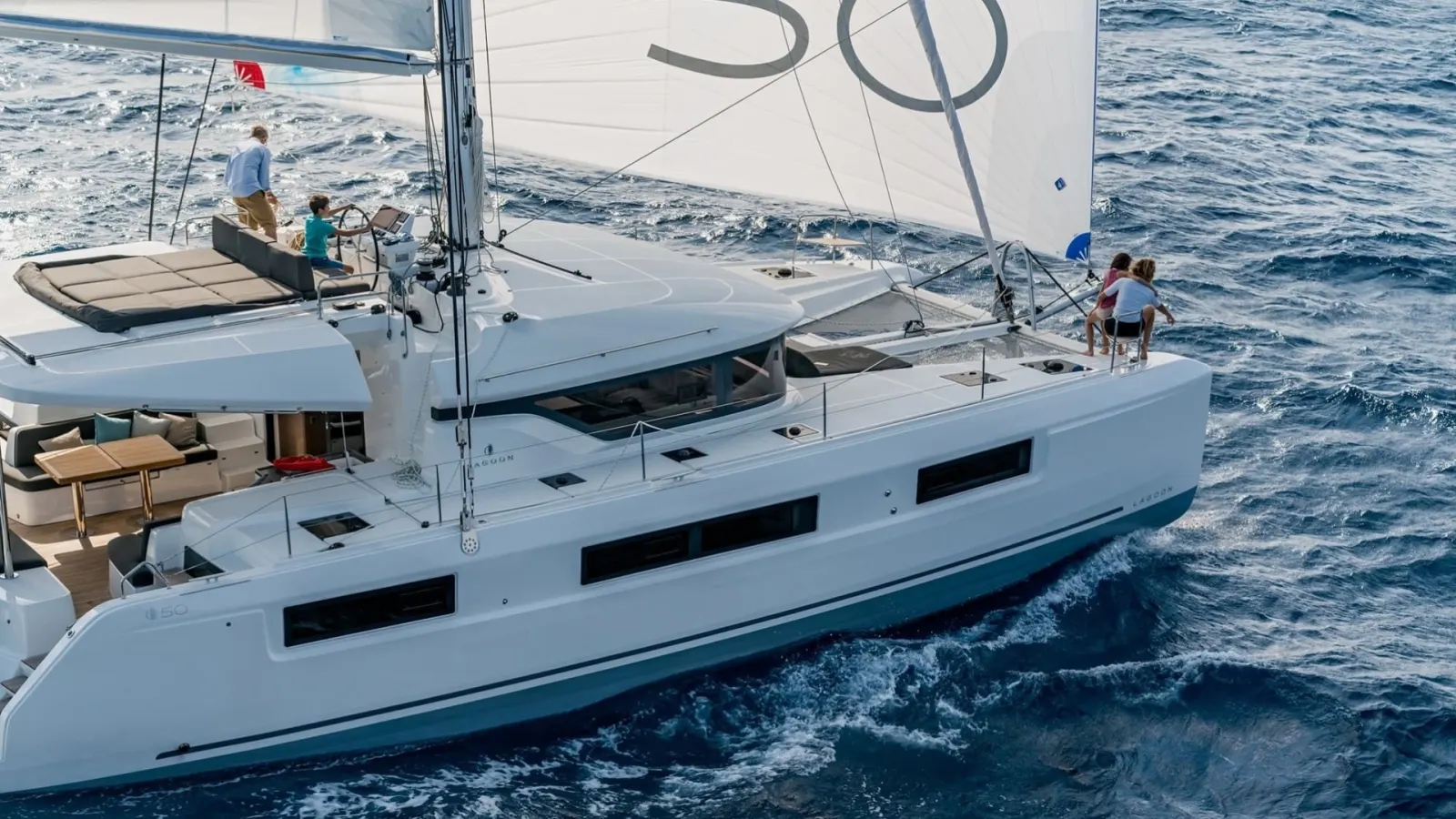
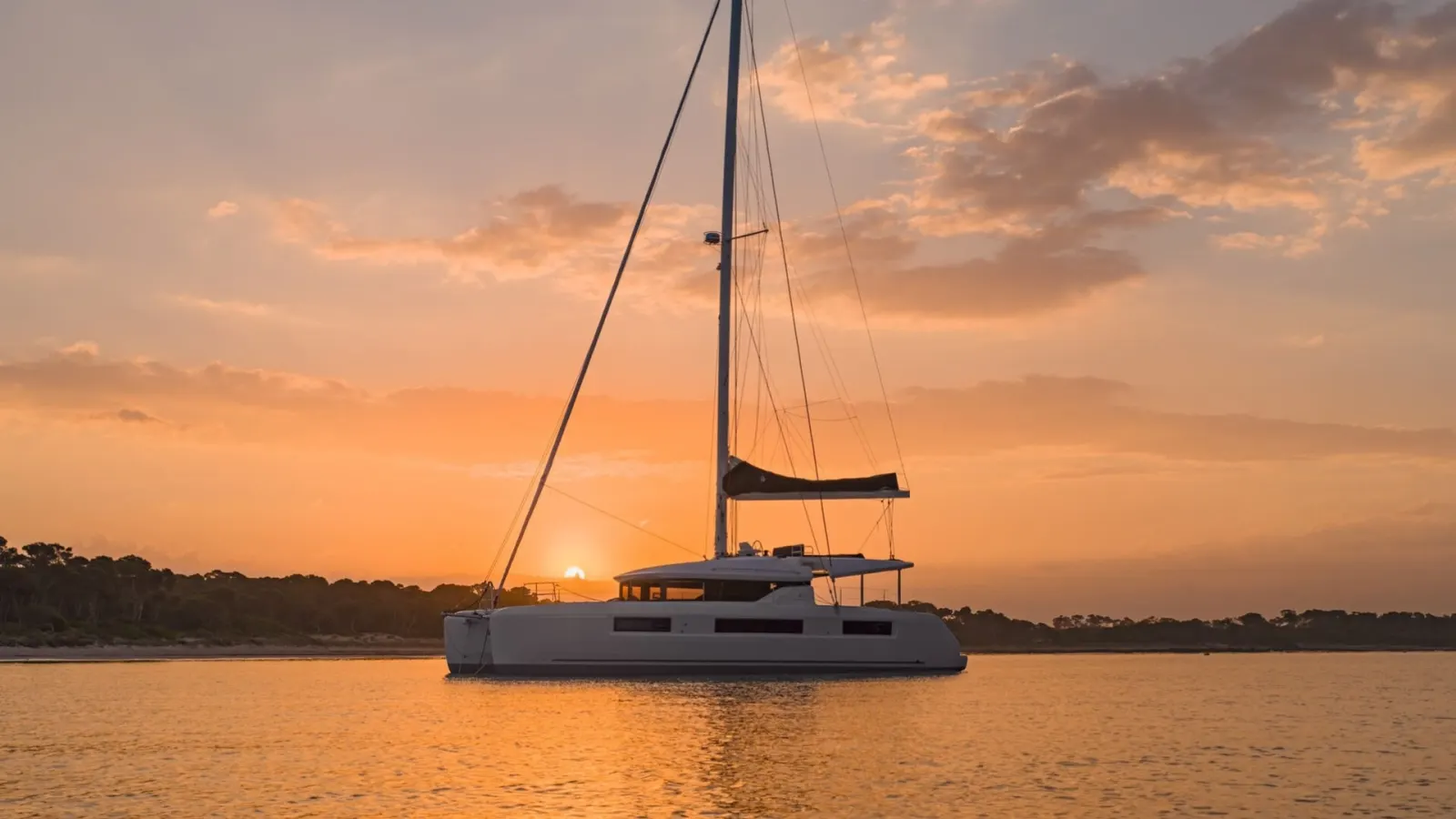
Catamarans are the choice for stability and space per guest: two hulls mean little rolling at anchor, a large saloon on one level and a shallow draft that lets them anchor close to beaches. Our crewed catamarans in Croatia sleep six to ten guests.
09
Season, sea and wind
The Croatian charter season runs from May to October. June and September are the best balance of warm water, settled weather and room in the harbours; July and August are the warmest and the busiest, and the popular harbours of Hvar, Korčula and Dubrovnik fill early in the afternoon. May and October are quieter and cheaper, with cooler water.
In summer the maestral, a north-westerly sea breeze, fills in most afternoons and dies away at sunset; it makes for pleasant sailing and cooler evenings. The bura is a gusty north-easterly that blows off the mountains, more common outside the summer; the jugo is a south-easterly that brings swell and cloud. Crews keep a close eye on the forecast and choose sheltered bays accordingly.
10
Prices, APA and what’s included
Yachts in Croatia are priced per week for the whole boat, and the rate depends on the yacht’s size, standard and the time of season, with July and August at the top. The price range on this page is calculated live from the yachts that currently show a weekly rate; many yachts are priced on request, so ask us for any boat that interests you.
Most Croatian yachts in our listings work with an APA (running-cost advance), which the captain uses during the week for fuel, food, drinks, marina and port fees. The APA is charged separately; its rate varies by yacht and is confirmed at the quote stage. Some smaller yachts quote these costs separately instead. How VAT and local fees such as the tourist tax apply is also confirmed in the quote.
Charter prices
Charter basis
Whole yacht, usually 7 nights
Crew
Always included: captain and crew
Running costs
APA on most yachts; charged separately, rate confirmed in the quote
Local fees and VAT
Stated in each quote
One-way or other start port
Often possible; any repositioning fee confirmed in the quote
Frequently asked questions
Do I need a sailing licence to charter a yacht in Croatia?
No. Every yacht on this page is chartered with a professional captain and crew, who handle navigation, mooring and the running of the boat. A licence is only required for bareboat charters, which we do not offer.
How much does a yacht charter in Croatia cost?
Yachts are chartered for the whole boat, usually by the week, and the rate depends on size, standard and season. The weekly price range shown on this page is calculated live from the yachts with a published rate; others are priced on request. Most yachts add an APA for running costs, and the quote states VAT and local fees.
Where do yacht charters in Croatia start?
Mainly in Split and Dubrovnik, with other yachts in Trogir, Šibenik, Zadar and Baška Voda. The nearest airports are Split (SPU), Dubrovnik (DBV) and Zadar (ZAD). A yacht can often start from another Dalmatian port than its home marina; this is confirmed in the quote.
Should I start in Split or Dubrovnik?
Split puts you closest to Brač, Hvar, Vis and Šolta, the most popular islands, and has the largest choice of yachts. Dubrovnik is better for the Elaphite islands, Mljet, Korčula and a visit to Montenegro. If you want both, a one-way week between the two is a good option.
Can I book a one-way charter from Split to Dubrovnik?
Often yes. Because the yacht has to return to its base, a one-way week can carry a repositioning fee, or be offered on dates when the yacht is moving anyway. We check this for each yacht and include it in the quote.
Can a Croatia charter include Montenegro?
Often yes, on routes that start or end near Dubrovnik, and we also list yachts based in Montenegro’s Bay of Kotor. Montenegro is outside the EU and Schengen, so the yacht clears at an official port of entry and every guest needs a valid passport and, depending on nationality, a visa. Whether a crossing is possible with a given yacht is confirmed at the quote stage.
When is the best time for a yacht charter in Croatia?
June and September offer warm water and quieter harbours; July and August are the warmest and busiest months; May and October are calmer and cheaper, with cooler water. The season usually runs from May to October.
Gulet, motor yacht or catamaran: which is best for Croatia?
A gulet suits families and groups who want space on deck and long meals on board. A motor yacht covers distance quickly, useful on one-way weeks or for outer islands such as Vis and Lastovo. A catamaran offers stability at anchor and lots of space per guest. We can suggest a shortlist once we know your group and route.
How many guests can a yacht in Croatia take?
Most of our Croatian yachts sleep 8 to 12 guests in 4 to 6 cabins. A few large motor yachts take bigger groups in up to 18 cabins. Each yacht’s cabins and capacity are shown on its page.
What is included in the charter price?
The yacht and its crew. Fuel, food, drinks and port fees are usually covered by the APA or quoted as extras, and national park entry fees are usually paid locally. Each quote lists exactly what is included and what is not.
Also available: crewed yachts in Montenegro (Bay of Kotor)
These yachts are based in Tivat, Kotor, Herceg Novi and Portonovi. They can be combined with a start or finish near Dubrovnik; border clearance and any repositioning are confirmed in the quote.