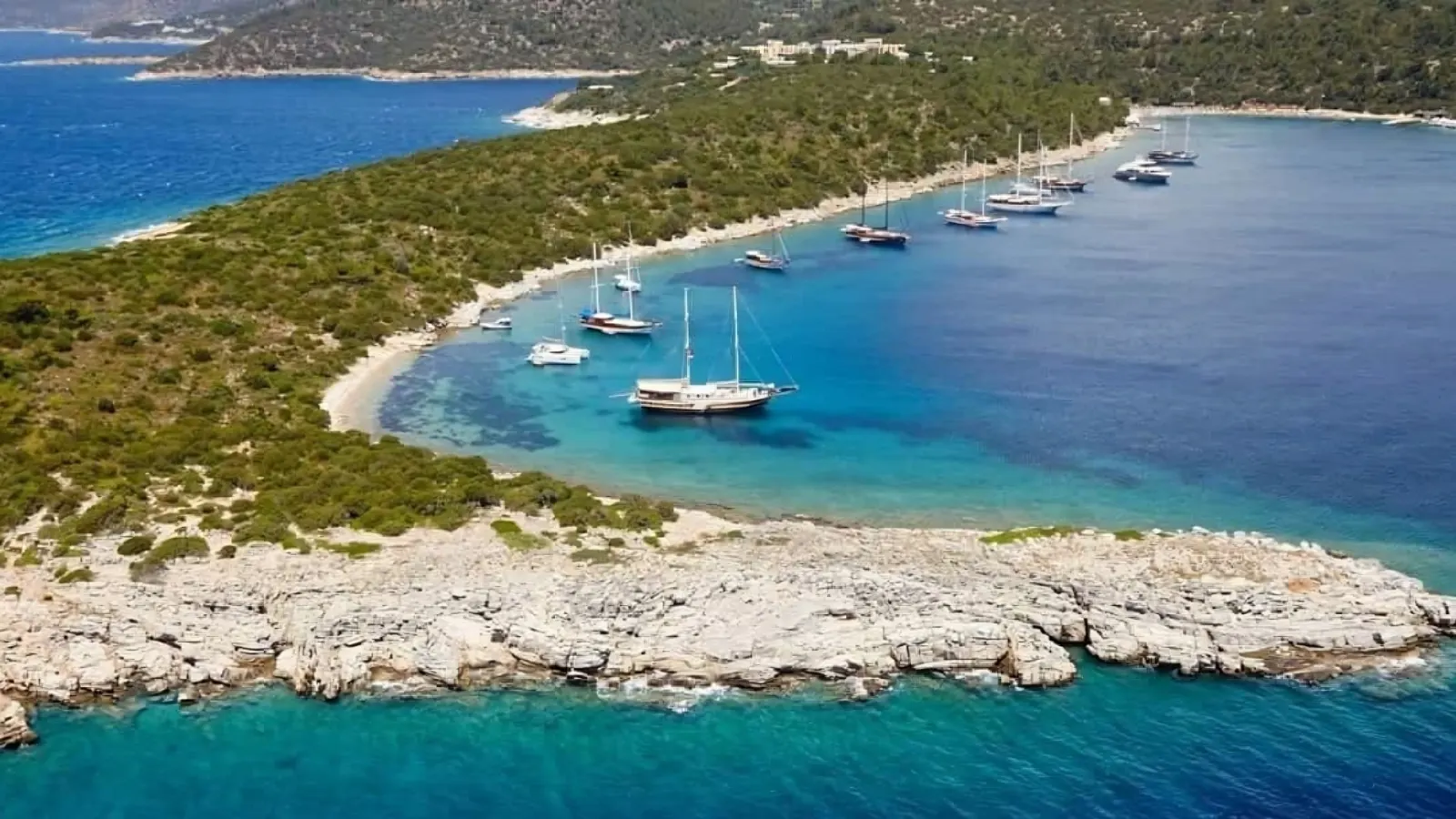
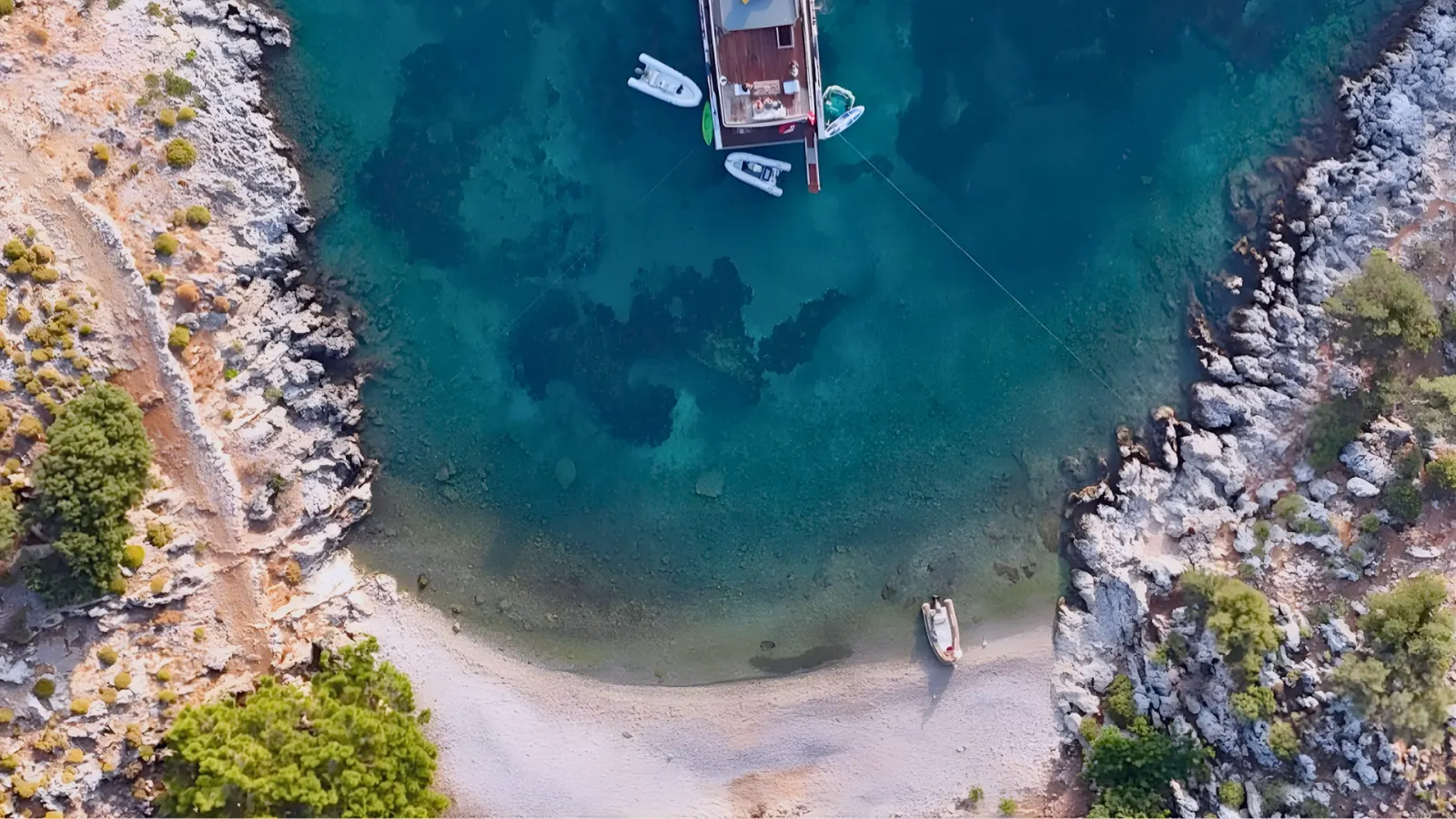
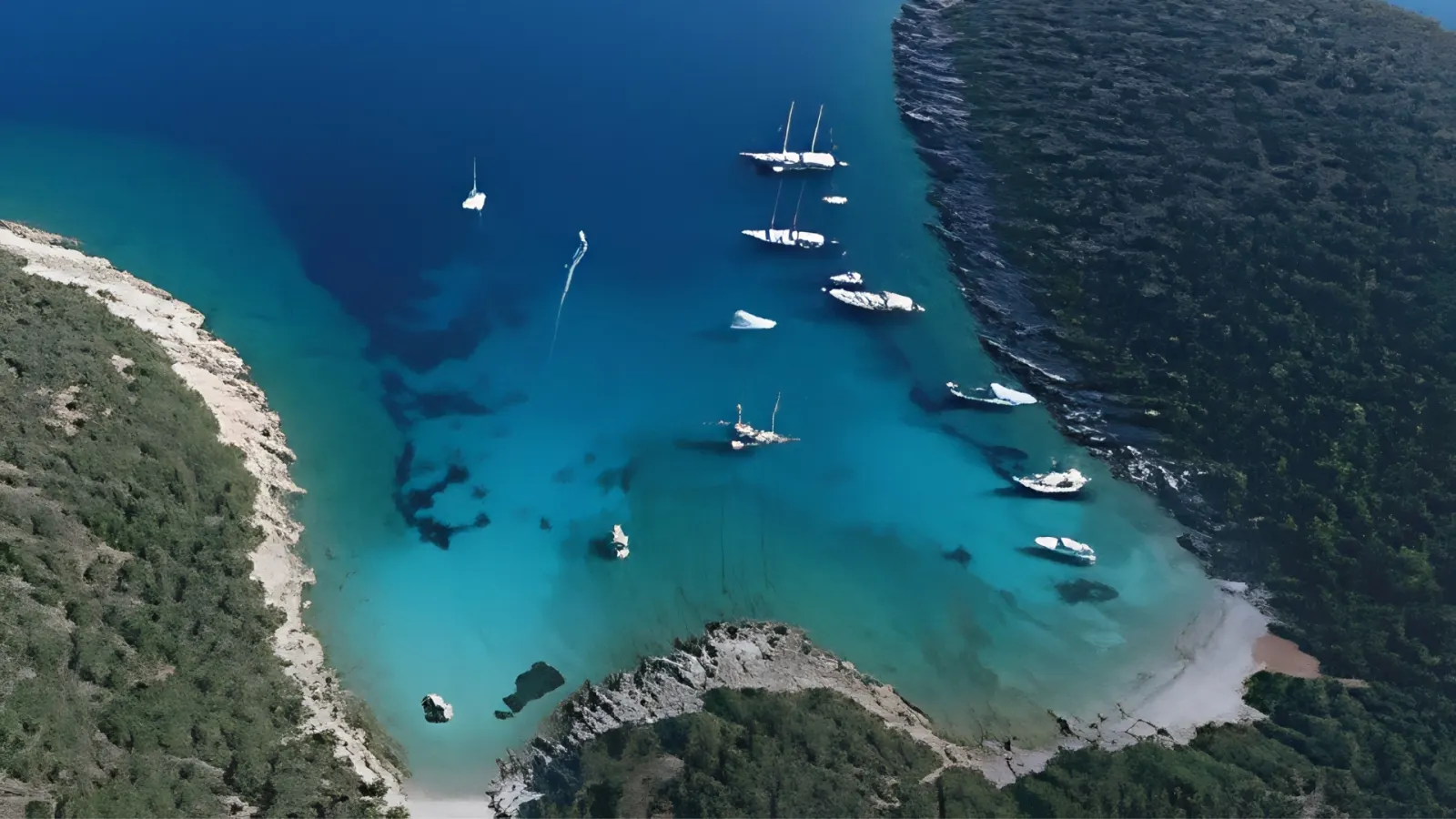
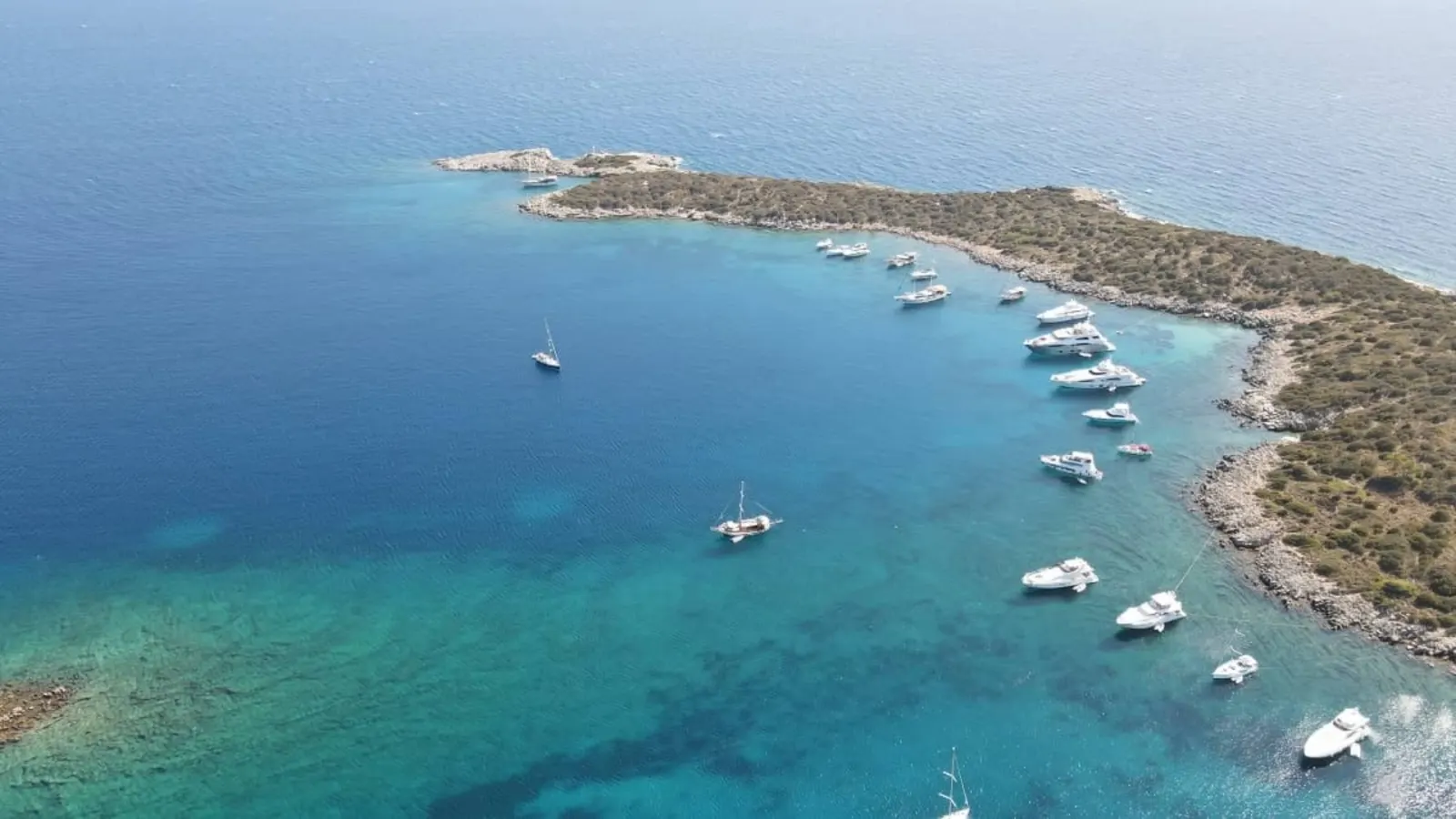
One of the largest and most impressive bays of Bodrum, Kisebuku takes its name from the ancient church ruins located on its shores. This protected area resembles an open-air museum with its Byzantine-era monastery, bathhouse, and cistern remains. Surrounded by olive and oleander trees, the wide structure of the bay provides a comfortable and sheltered anchorage for yachts. For sea enthusiasts who wish to both trace the steps of history and cool off in crystal-clear waters, Kisebuku is one of the most cultural stops of the blue cruise.
Turkey
Country
KSB
Port Code
6
Guide Sections
37.00°, 27.65°
GPS
Logistics & Technical
Kisebükü is a wide and deeply indented, well-sheltered natural bay located on the southern coast of the Bodrum Peninsula. Technically, it offers excellent protection against the region's strong northerly Meltemi winds; even if gusts come over the hills, the water remains as calm as a swimming pool. However, it is exposed to southerly and easterly winds. The seabed is sandy, providing highly reliable holding. The standard practice here is to drop anchor in 6-10 meters of water on the western or northern shores and take long lines to the ancient pine trees or rocks on land. Entry into the bay is straightforward with no hidden reefs.
🏖️ Pristine Beach🪨 Rocky & Wild Nature📍 Very Close to Shore🚤 1 Minute by Dinghy
Gastronomy & Social Life
There are no luxury restaurants, modern beach clubs, or loud venues in Kisebükü; social life is entirely centered on the simplicity of nature and sailor camaraderie. It stands as one of the most untouched and peaceful stops of the Blue Cruise. In the evening, as the soft lights of anchored yachts and traditional gulets reflect on the flat water, an absolute serenity takes over the deck. Socializing here means enjoying meals prepared in your own galley and long conversations with friends under the stars.
The ultimate activity in the bay is stepping ashore to explore the Byzantine-era Alakışla Ancient Ruins hidden inside the forest. Walking among the remains of the historic church, monastery, bathhouse, and cisterns directly behind the beach feels like traveling through time. On the water, snorkeling around the rocky headlands on the eastern side reveals rich marine rock formations, while early morning paddleboarding or kayaking in the mirror-like water is highly popular.
Highlights
Water Sports
🛶 Calm Canoe Exploration
Diving & Snorkeling
🐟 Among Fish Schools🔰 For First-Timers💎 Aquarium Clarity🐠 Colorful Marine Life
Hiking & Trekking
👨👩👧 Family-Friendly Hike🥾 Light Effort / Moderate🩴 Flip-Flop Friendly🏛️ Historic Ancient Trails🚶 Short & Enjoyable Walk
Culture & Nature
Kisebükü derives its name from "Kilise Bükü" (Church Bay) due to the heavy presence of Byzantine churches built along its shores. Its nature exhibits a completely pristine Aegean character, adorned with wild olive trees, massive pine forests, and myrtle bushes. Culturally, it bears the Late Antiquity traces of the Byzantine civilization. Due to its sheltered structure and freshwater resources, it has historically served as a strategic stop for sailors, famously praised by the Fisherman of Halicarnassus.
Highlights
Ancient Sites
👑 In the Footsteps of Empires💎 Isolated & Hidden Treasure📜 With Mythological Story🚶 Walkable from Boat
There are no marina facilities or shops (no electricity, water, provisioning, or fuel supply) inside the bay. Kisebükü is a completely wild and untouched natural harbor, so ensure your yacht's tanks and provisions are completely full before entering. Mobile phone signals are generally functional inside the bay. With its wave-free, pool-like calm waters and absolute tranquility, it is the most comfortable first or last stop in Gökova for families and casual cruisers.
Highlights
Kids & Family
🏖️ Shallow & Warm Sea🛝 Safe Play Area
Personal Insight
Captain's Note
“
"Leaving the bustling harbor waters of Bodrum and slipping into the calm, lake-like blue of Kisebükü after just a 1-2 hour sail is the most rewarding moment that signals the true beginning of the Blue Cruise. Once your lines are secured to the pine trees in the late afternoon, turn off the engine and just listen to the cicadas. When the Milky Way reflects on the flat water at night, you will understand this privilege. Just watch out for shallow rocky debris near the shore when taking lines."
Kisebuku is one of the largest and most impressive bays of Bodrum, named after the ancient church ruins on its shores. This protected area resembles an open-air museum, with Byzantine-era monastery, bathhouse and cistern remains set among olive and oleander trees.
What history can I see at Kisebuku?
Kisebuku is rich in history, with Byzantine-era remains including a monastery, bathhouse and cistern that give it the feel of an open-air museum. The ancient church ruins that lend the bay its name make it one of the more cultural stops in the area.
Is Kisebuku a comfortable anchorage for yachts?
Yes. The wide structure of Kisebuku provides a comfortable and sheltered anchorage for yachts, surrounded by olive and oleander trees. Its size and protection make it a relaxed place to spend time, with your captain selecting the best position.
Can I swim at Kisebuku?
Definitely. Kisebuku invites sea enthusiasts to cool off in its crystal-clear waters after exploring the ruins. The combination of history ashore and clear water at anchor makes it appealing for travellers who want both culture and swimming.
Why is Kisebuku described as a cultural stop on a blue cruise?
Kisebuku stands out because it lets you trace the steps of history among Byzantine ruins while enjoying a sheltered natural bay. This blend of an open-air museum setting and crystal-clear water makes it one of the most cultural anchorages near Bodrum.

_1600.webp?alt=media)
_1600.webp?alt=media)